DeepExtractor — Training Tutorial (Google Colab)

This notebook trains a fresh DeepExtractor model from scratch on synthetic (numpy) noise, plots the training losses, and tests the model on sine-Gaussian injections. It is designed to run on Google Colab with a free T4 GPU.
Tip: Go to Runtime → Change runtime type → GPU before running.
Overview

Figure 1 — DeepExtractor pipeline. The raw strain \(h(t) = n(t) + g(t)\) (background noise plus an injected glitch) is converted to a magnitude + phase spectrogram via STFT, passed through the DeepExtractor U-Net, and the predicted clean-noise spectrogram is converted back to the time domain via iSTFT to give the reconstructed background \(n(t)\). The recovered glitch/residual is then \(g(t) = h(t) - n(t)\) — this is exactly what Steps 1–6 below build and train, on synthetic data.
Part |
What |
|---|---|
Part I — Introduction |
Build the full DeepExtractor pipeline from scratch: synthetic data generation, STFT U-Net, training loop, reconstruction on sine-Gaussian injections. Fully worked — run top to bottom for a working baseline model. |
Part II — Hackathon Tasks |
Four hands-on exercises: model depth, time-domain vs. STFT architecture, training-set size, and generalisation to unseen signal types. |
Part III — MC-Dropout Uncertainty Showcase |
Get uncertainty estimates “for free” by leaving dropout on at test time — reconstruct a real detector glitch with confidence bands, no extra training needed. |
Part IV — Bonus: Reconstructing a Real CBC Waveform |
Take a genuine PyCBC-simulated compact-binary waveform, reshape it to resemble a longer-duration coalescence, and reconstruct it with the already-trained model. |
Part II TODO Exercises:
Task 1 — build + train a
UNET2Dat a different depth (features_configs), evaluate mismatchTask 2 — build + train a
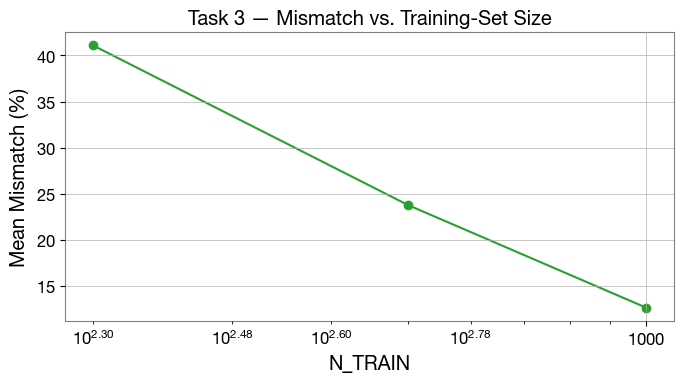
UNET1D(time-domain) and compare against the STFT baselineTask 3 — build + train a
UNET2Dat varyingN_TRAINsizes, evaluate mismatchTask 4 — build + train Model A and Model B on different signal-type mixes, compare generalisation
Everything in Parts I, III, and IV is fully solved and runnable as-is — Part II is where you write code.
[31]:
!pip install deepextractor gengli
Requirement already satisfied: deepextractor in /opt/homebrew/Caskroom/miniforge/base/envs/deepextractor/lib/python3.12/site-packages (0.1.5.dev5+gd8fbae65f.d20260402)
Requirement already satisfied: gengli in /opt/homebrew/Caskroom/miniforge/base/envs/deepextractor/lib/python3.12/site-packages (0.2.0)
Requirement already satisfied: numpy<2.0,>=1.26 in /opt/homebrew/Caskroom/miniforge/base/envs/deepextractor/lib/python3.12/site-packages (from deepextractor) (1.26.4)
Requirement already satisfied: torch>=2.1 in /opt/homebrew/Caskroom/miniforge/base/envs/deepextractor/lib/python3.12/site-packages (from deepextractor) (2.5.1)
Requirement already satisfied: matplotlib>=3.9 in /opt/homebrew/Caskroom/miniforge/base/envs/deepextractor/lib/python3.12/site-packages (from deepextractor) (3.10.8)
Requirement already satisfied: scienceplots>=2.1 in /opt/homebrew/Caskroom/miniforge/base/envs/deepextractor/lib/python3.12/site-packages (from deepextractor) (2.2.1)
Requirement already satisfied: pandas>=2.2 in /opt/homebrew/Caskroom/miniforge/base/envs/deepextractor/lib/python3.12/site-packages (from deepextractor) (3.0.1)
Requirement already satisfied: tqdm>=4.67 in /opt/homebrew/Caskroom/miniforge/base/envs/deepextractor/lib/python3.12/site-packages (from deepextractor) (4.67.3)
Requirement already satisfied: scikit-learn>=1.5 in /opt/homebrew/Caskroom/miniforge/base/envs/deepextractor/lib/python3.12/site-packages (from deepextractor) (1.8.0)
Requirement already satisfied: gwpy>=3.0 in /opt/homebrew/Caskroom/miniforge/base/envs/deepextractor/lib/python3.12/site-packages (from deepextractor) (4.0.1)
Requirement already satisfied: pycbc>=2.7 in /opt/homebrew/Caskroom/miniforge/base/envs/deepextractor/lib/python3.12/site-packages (from deepextractor) (2.10.0)
Requirement already satisfied: scipy>=1.11 in /opt/homebrew/Caskroom/miniforge/base/envs/deepextractor/lib/python3.12/site-packages (from deepextractor) (1.17.1)
Requirement already satisfied: huggingface_hub>=0.20 in /opt/homebrew/Caskroom/miniforge/base/envs/deepextractor/lib/python3.12/site-packages (from deepextractor) (1.5.0)
Requirement already satisfied: bilby>=2.0 in /opt/homebrew/Caskroom/miniforge/base/envs/deepextractor/lib/python3.12/site-packages (from deepextractor) (2.8.0)
Requirement already satisfied: ray>=0.8.0 in /opt/homebrew/Caskroom/miniforge/base/envs/deepextractor/lib/python3.12/site-packages (from gengli) (2.54.0)
Requirement already satisfied: bilby.cython>=0.3.0 in /opt/homebrew/Caskroom/miniforge/base/envs/deepextractor/lib/python3.12/site-packages (from bilby>=2.0->deepextractor) (0.5.3)
Requirement already satisfied: dynesty>=2.0.1 in /opt/homebrew/Caskroom/miniforge/base/envs/deepextractor/lib/python3.12/site-packages (from bilby>=2.0->deepextractor) (3.0.0)
Requirement already satisfied: emcee in /opt/homebrew/Caskroom/miniforge/base/envs/deepextractor/lib/python3.12/site-packages (from bilby>=2.0->deepextractor) (3.1.6)
Requirement already satisfied: corner in /opt/homebrew/Caskroom/miniforge/base/envs/deepextractor/lib/python3.12/site-packages (from bilby>=2.0->deepextractor) (2.2.3)
Requirement already satisfied: dill in /opt/homebrew/Caskroom/miniforge/base/envs/deepextractor/lib/python3.12/site-packages (from bilby>=2.0->deepextractor) (0.4.1)
Requirement already satisfied: h5py in /opt/homebrew/Caskroom/miniforge/base/envs/deepextractor/lib/python3.12/site-packages (from bilby>=2.0->deepextractor) (3.15.1)
Requirement already satisfied: attrs in /opt/homebrew/Caskroom/miniforge/base/envs/deepextractor/lib/python3.12/site-packages (from bilby>=2.0->deepextractor) (25.4.0)
Requirement already satisfied: astropy>=6.1.6 in /opt/homebrew/Caskroom/miniforge/base/envs/deepextractor/lib/python3.12/site-packages (from gwpy>=3.0->deepextractor) (7.2.0)
Requirement already satisfied: dateparser>=1.2.0 in /opt/homebrew/Caskroom/miniforge/base/envs/deepextractor/lib/python3.12/site-packages (from gwpy>=3.0->deepextractor) (1.3.0)
Requirement already satisfied: dqsegdb2>=1.3.0 in /opt/homebrew/Caskroom/miniforge/base/envs/deepextractor/lib/python3.12/site-packages (from gwpy>=3.0->deepextractor) (1.3.0)
Requirement already satisfied: gwdatafind>=2.0.0 in /opt/homebrew/Caskroom/miniforge/base/envs/deepextractor/lib/python3.12/site-packages (from gwpy>=3.0->deepextractor) (2.1.1)
Requirement already satisfied: gwosc>=0.6.0 in /opt/homebrew/Caskroom/miniforge/base/envs/deepextractor/lib/python3.12/site-packages (from gwpy>=3.0->deepextractor) (0.8.1)
Requirement already satisfied: igwn-segments>=2.0.0 in /opt/homebrew/Caskroom/miniforge/base/envs/deepextractor/lib/python3.12/site-packages (from gwpy>=3.0->deepextractor) (2.1.1)
Requirement already satisfied: ligotimegps>=2.1.0 in /opt/homebrew/Caskroom/miniforge/base/envs/deepextractor/lib/python3.12/site-packages (from gwpy>=3.0->deepextractor) (2.1.0)
Requirement already satisfied: packaging>=24.2 in /opt/homebrew/Caskroom/miniforge/base/envs/deepextractor/lib/python3.12/site-packages (from gwpy>=3.0->deepextractor) (26.0)
Requirement already satisfied: python-dateutil>=2.9.0 in /opt/homebrew/Caskroom/miniforge/base/envs/deepextractor/lib/python3.12/site-packages (from gwpy>=3.0->deepextractor) (2.9.0.post0)
Requirement already satisfied: requests>=2.32.3 in /opt/homebrew/Caskroom/miniforge/base/envs/deepextractor/lib/python3.12/site-packages (from gwpy>=3.0->deepextractor) (2.32.5)
Requirement already satisfied: pyerfa>=2.0.1.1 in /opt/homebrew/Caskroom/miniforge/base/envs/deepextractor/lib/python3.12/site-packages (from astropy>=6.1.6->gwpy>=3.0->deepextractor) (2.0.1.5)
Requirement already satisfied: astropy-iers-data>=0.2025.10.27.0.39.10 in /opt/homebrew/Caskroom/miniforge/base/envs/deepextractor/lib/python3.12/site-packages (from astropy>=6.1.6->gwpy>=3.0->deepextractor) (0.2026.3.2.0.47.4)
Requirement already satisfied: PyYAML>=6.0.0 in /opt/homebrew/Caskroom/miniforge/base/envs/deepextractor/lib/python3.12/site-packages (from astropy>=6.1.6->gwpy>=3.0->deepextractor) (6.0.3)
Requirement already satisfied: pytz>=2024.2 in /opt/homebrew/Caskroom/miniforge/base/envs/deepextractor/lib/python3.12/site-packages (from dateparser>=1.2.0->gwpy>=3.0->deepextractor) (2026.1.post1)
Requirement already satisfied: regex>=2024.9.11 in /opt/homebrew/Caskroom/miniforge/base/envs/deepextractor/lib/python3.12/site-packages (from dateparser>=1.2.0->gwpy>=3.0->deepextractor) (2026.2.28)
Requirement already satisfied: tzlocal>=0.2 in /opt/homebrew/Caskroom/miniforge/base/envs/deepextractor/lib/python3.12/site-packages (from dateparser>=1.2.0->gwpy>=3.0->deepextractor) (5.3.1)
Requirement already satisfied: click>=6.7 in /opt/homebrew/Caskroom/miniforge/base/envs/deepextractor/lib/python3.12/site-packages (from dqsegdb2>=1.3.0->gwpy>=3.0->deepextractor) (8.3.1)
Requirement already satisfied: igwn-auth-utils>=1.0.0 in /opt/homebrew/Caskroom/miniforge/base/envs/deepextractor/lib/python3.12/site-packages (from dqsegdb2>=1.3.0->gwpy>=3.0->deepextractor) (1.4.0)
Requirement already satisfied: filelock>=3.10.0 in /opt/homebrew/Caskroom/miniforge/base/envs/deepextractor/lib/python3.12/site-packages (from huggingface_hub>=0.20->deepextractor) (3.25.1)
Requirement already satisfied: fsspec>=2023.5.0 in /opt/homebrew/Caskroom/miniforge/base/envs/deepextractor/lib/python3.12/site-packages (from huggingface_hub>=0.20->deepextractor) (2026.2.0)
Requirement already satisfied: hf-xet<2.0.0,>=1.2.0 in /opt/homebrew/Caskroom/miniforge/base/envs/deepextractor/lib/python3.12/site-packages (from huggingface_hub>=0.20->deepextractor) (1.3.2)
Requirement already satisfied: httpx<1,>=0.23.0 in /opt/homebrew/Caskroom/miniforge/base/envs/deepextractor/lib/python3.12/site-packages (from huggingface_hub>=0.20->deepextractor) (0.28.1)
Requirement already satisfied: typer in /opt/homebrew/Caskroom/miniforge/base/envs/deepextractor/lib/python3.12/site-packages (from huggingface_hub>=0.20->deepextractor) (0.24.1)
Requirement already satisfied: typing-extensions>=4.1.0 in /opt/homebrew/Caskroom/miniforge/base/envs/deepextractor/lib/python3.12/site-packages (from huggingface_hub>=0.20->deepextractor) (4.15.0)
Requirement already satisfied: anyio in /opt/homebrew/Caskroom/miniforge/base/envs/deepextractor/lib/python3.12/site-packages (from httpx<1,>=0.23.0->huggingface_hub>=0.20->deepextractor) (4.12.1)
Requirement already satisfied: certifi in /opt/homebrew/Caskroom/miniforge/base/envs/deepextractor/lib/python3.12/site-packages (from httpx<1,>=0.23.0->huggingface_hub>=0.20->deepextractor) (2026.2.25)
Requirement already satisfied: httpcore==1.* in /opt/homebrew/Caskroom/miniforge/base/envs/deepextractor/lib/python3.12/site-packages (from httpx<1,>=0.23.0->huggingface_hub>=0.20->deepextractor) (1.0.9)
Requirement already satisfied: idna in /opt/homebrew/Caskroom/miniforge/base/envs/deepextractor/lib/python3.12/site-packages (from httpx<1,>=0.23.0->huggingface_hub>=0.20->deepextractor) (3.11)
Requirement already satisfied: h11>=0.16 in /opt/homebrew/Caskroom/miniforge/base/envs/deepextractor/lib/python3.12/site-packages (from httpcore==1.*->httpx<1,>=0.23.0->huggingface_hub>=0.20->deepextractor) (0.16.0)
Requirement already satisfied: cryptography>=44.0.1 in /opt/homebrew/Caskroom/miniforge/base/envs/deepextractor/lib/python3.12/site-packages (from igwn-auth-utils>=1.0.0->dqsegdb2>=1.3.0->gwpy>=3.0->deepextractor) (46.0.5)
Requirement already satisfied: safe-netrc>=1.0 in /opt/homebrew/Caskroom/miniforge/base/envs/deepextractor/lib/python3.12/site-packages (from igwn-auth-utils>=1.0.0->dqsegdb2>=1.3.0->gwpy>=3.0->deepextractor) (1.0.1)
Requirement already satisfied: scitokens>=1.8 in /opt/homebrew/Caskroom/miniforge/base/envs/deepextractor/lib/python3.12/site-packages (from igwn-auth-utils>=1.0.0->dqsegdb2>=1.3.0->gwpy>=3.0->deepextractor) (1.8.1)
Requirement already satisfied: cffi>=2.0.0 in /opt/homebrew/Caskroom/miniforge/base/envs/deepextractor/lib/python3.12/site-packages (from cryptography>=44.0.1->igwn-auth-utils>=1.0.0->dqsegdb2>=1.3.0->gwpy>=3.0->deepextractor) (2.0.0)
Requirement already satisfied: pycparser in /opt/homebrew/Caskroom/miniforge/base/envs/deepextractor/lib/python3.12/site-packages (from cffi>=2.0.0->cryptography>=44.0.1->igwn-auth-utils>=1.0.0->dqsegdb2>=1.3.0->gwpy>=3.0->deepextractor) (3.0)
Requirement already satisfied: contourpy>=1.0.1 in /opt/homebrew/Caskroom/miniforge/base/envs/deepextractor/lib/python3.12/site-packages (from matplotlib>=3.9->deepextractor) (1.3.3)
Requirement already satisfied: cycler>=0.10 in /opt/homebrew/Caskroom/miniforge/base/envs/deepextractor/lib/python3.12/site-packages (from matplotlib>=3.9->deepextractor) (0.12.1)
Requirement already satisfied: fonttools>=4.22.0 in /opt/homebrew/Caskroom/miniforge/base/envs/deepextractor/lib/python3.12/site-packages (from matplotlib>=3.9->deepextractor) (4.61.1)
Requirement already satisfied: kiwisolver>=1.3.1 in /opt/homebrew/Caskroom/miniforge/base/envs/deepextractor/lib/python3.12/site-packages (from matplotlib>=3.9->deepextractor) (1.4.9)
Requirement already satisfied: pillow>=8 in /opt/homebrew/Caskroom/miniforge/base/envs/deepextractor/lib/python3.12/site-packages (from matplotlib>=3.9->deepextractor) (12.1.1)
Requirement already satisfied: pyparsing>=3 in /opt/homebrew/Caskroom/miniforge/base/envs/deepextractor/lib/python3.12/site-packages (from matplotlib>=3.9->deepextractor) (3.3.2)
Requirement already satisfied: cython>=0.29 in /opt/homebrew/Caskroom/miniforge/base/envs/deepextractor/lib/python3.12/site-packages (from pycbc>=2.7->deepextractor) (3.2.4)
Requirement already satisfied: mpld3>=0.3 in /opt/homebrew/Caskroom/miniforge/base/envs/deepextractor/lib/python3.12/site-packages (from pycbc>=2.7->deepextractor) (0.5.12)
Requirement already satisfied: jinja2 in /opt/homebrew/Caskroom/miniforge/base/envs/deepextractor/lib/python3.12/site-packages (from pycbc>=2.7->deepextractor) (3.1.6)
Requirement already satisfied: Mako>=1.0.1 in /opt/homebrew/Caskroom/miniforge/base/envs/deepextractor/lib/python3.12/site-packages (from pycbc>=2.7->deepextractor) (1.3.10)
Requirement already satisfied: beautifulsoup4>=4.6.0 in /opt/homebrew/Caskroom/miniforge/base/envs/deepextractor/lib/python3.12/site-packages (from pycbc>=2.7->deepextractor) (4.14.3)
Requirement already satisfied: setuptools in /opt/homebrew/Caskroom/miniforge/base/envs/deepextractor/lib/python3.12/site-packages (from pycbc>=2.7->deepextractor) (82.0.0)
Requirement already satisfied: pegasus-wms.api>=5.1.1 in /opt/homebrew/Caskroom/miniforge/base/envs/deepextractor/lib/python3.12/site-packages (from pycbc>=2.7->deepextractor) (5.1.2)
Requirement already satisfied: igwn-ligolw in /opt/homebrew/Caskroom/miniforge/base/envs/deepextractor/lib/python3.12/site-packages (from pycbc>=2.7->deepextractor) (2.1.1)
Requirement already satisfied: lalsuite!=7.2 in /opt/homebrew/Caskroom/miniforge/base/envs/deepextractor/lib/python3.12/site-packages (from pycbc>=2.7->deepextractor) (7.26.4)
Requirement already satisfied: lscsoft-glue>=1.59.3 in /opt/homebrew/Caskroom/miniforge/base/envs/deepextractor/lib/python3.12/site-packages (from pycbc>=2.7->deepextractor) (4.1.1)
Requirement already satisfied: pykerr in /opt/homebrew/Caskroom/miniforge/base/envs/deepextractor/lib/python3.12/site-packages (from pycbc>=2.7->deepextractor) (0.2.0)
Requirement already satisfied: soupsieve>=1.6.1 in /opt/homebrew/Caskroom/miniforge/base/envs/deepextractor/lib/python3.12/site-packages (from beautifulsoup4>=4.6.0->pycbc>=2.7->deepextractor) (2.8.3)
Requirement already satisfied: MarkupSafe>=0.9.2 in /opt/homebrew/Caskroom/miniforge/base/envs/deepextractor/lib/python3.12/site-packages (from Mako>=1.0.1->pycbc>=2.7->deepextractor) (3.0.3)
Requirement already satisfied: pegasus-wms.common in /opt/homebrew/Caskroom/miniforge/base/envs/deepextractor/lib/python3.12/site-packages (from pegasus-wms.api>=5.1.1->pycbc>=2.7->deepextractor) (5.1.2)
Requirement already satisfied: six>=1.5 in /opt/homebrew/Caskroom/miniforge/base/envs/deepextractor/lib/python3.12/site-packages (from python-dateutil>=2.9.0->gwpy>=3.0->deepextractor) (1.17.0)
Requirement already satisfied: jsonschema in /opt/homebrew/Caskroom/miniforge/base/envs/deepextractor/lib/python3.12/site-packages (from ray>=0.8.0->gengli) (4.26.0)
Requirement already satisfied: msgpack<2.0.0,>=1.0.0 in /opt/homebrew/Caskroom/miniforge/base/envs/deepextractor/lib/python3.12/site-packages (from ray>=0.8.0->gengli) (1.1.2)
Requirement already satisfied: protobuf>=3.20.3 in /opt/homebrew/Caskroom/miniforge/base/envs/deepextractor/lib/python3.12/site-packages (from ray>=0.8.0->gengli) (7.34.0)
Requirement already satisfied: charset_normalizer<4,>=2 in /opt/homebrew/Caskroom/miniforge/base/envs/deepextractor/lib/python3.12/site-packages (from requests>=2.32.3->gwpy>=3.0->deepextractor) (3.4.4)
Requirement already satisfied: urllib3<3,>=1.21.1 in /opt/homebrew/Caskroom/miniforge/base/envs/deepextractor/lib/python3.12/site-packages (from requests>=2.32.3->gwpy>=3.0->deepextractor) (2.6.3)
Requirement already satisfied: joblib>=1.3.0 in /opt/homebrew/Caskroom/miniforge/base/envs/deepextractor/lib/python3.12/site-packages (from scikit-learn>=1.5->deepextractor) (1.5.3)
Requirement already satisfied: threadpoolctl>=3.2.0 in /opt/homebrew/Caskroom/miniforge/base/envs/deepextractor/lib/python3.12/site-packages (from scikit-learn>=1.5->deepextractor) (3.6.0)
Requirement already satisfied: PyJWT>=1.6.1 in /opt/homebrew/Caskroom/miniforge/base/envs/deepextractor/lib/python3.12/site-packages (from scitokens>=1.8->igwn-auth-utils>=1.0.0->dqsegdb2>=1.3.0->gwpy>=3.0->deepextractor) (2.11.0)
Requirement already satisfied: sympy==1.13.1 in /opt/homebrew/Caskroom/miniforge/base/envs/deepextractor/lib/python3.12/site-packages (from torch>=2.1->deepextractor) (1.13.1)
Requirement already satisfied: networkx in /opt/homebrew/Caskroom/miniforge/base/envs/deepextractor/lib/python3.12/site-packages (from torch>=2.1->deepextractor) (3.6.1)
Requirement already satisfied: mpmath<1.4,>=1.1.0 in /opt/homebrew/Caskroom/miniforge/base/envs/deepextractor/lib/python3.12/site-packages (from sympy==1.13.1->torch>=2.1->deepextractor) (1.3.0)
Requirement already satisfied: jsonschema-specifications>=2023.03.6 in /opt/homebrew/Caskroom/miniforge/base/envs/deepextractor/lib/python3.12/site-packages (from jsonschema->ray>=0.8.0->gengli) (2025.9.1)
Requirement already satisfied: referencing>=0.28.4 in /opt/homebrew/Caskroom/miniforge/base/envs/deepextractor/lib/python3.12/site-packages (from jsonschema->ray>=0.8.0->gengli) (0.37.0)
Requirement already satisfied: rpds-py>=0.25.0 in /opt/homebrew/Caskroom/miniforge/base/envs/deepextractor/lib/python3.12/site-packages (from jsonschema->ray>=0.8.0->gengli) (0.30.0)
Requirement already satisfied: shellingham>=1.3.0 in /opt/homebrew/Caskroom/miniforge/base/envs/deepextractor/lib/python3.12/site-packages (from typer->huggingface_hub>=0.20->deepextractor) (1.5.4)
Requirement already satisfied: rich>=12.3.0 in /opt/homebrew/Caskroom/miniforge/base/envs/deepextractor/lib/python3.12/site-packages (from typer->huggingface_hub>=0.20->deepextractor) (14.3.3)
Requirement already satisfied: annotated-doc>=0.0.2 in /opt/homebrew/Caskroom/miniforge/base/envs/deepextractor/lib/python3.12/site-packages (from typer->huggingface_hub>=0.20->deepextractor) (0.0.4)
Requirement already satisfied: markdown-it-py>=2.2.0 in /opt/homebrew/Caskroom/miniforge/base/envs/deepextractor/lib/python3.12/site-packages (from rich>=12.3.0->typer->huggingface_hub>=0.20->deepextractor) (4.0.0)
Requirement already satisfied: pygments<3.0.0,>=2.13.0 in /opt/homebrew/Caskroom/miniforge/base/envs/deepextractor/lib/python3.12/site-packages (from rich>=12.3.0->typer->huggingface_hub>=0.20->deepextractor) (2.19.2)
Requirement already satisfied: mdurl~=0.1 in /opt/homebrew/Caskroom/miniforge/base/envs/deepextractor/lib/python3.12/site-packages (from markdown-it-py>=2.2.0->rich>=12.3.0->typer->huggingface_hub>=0.20->deepextractor) (0.1.2)
[32]:
import os
import numpy as np
import torch
import torch.nn as nn
import torch.nn.functional as F
import torch.optim as optim
import matplotlib.pyplot as plt
import matplotlib.ticker as mticker
from sklearn.preprocessing import StandardScaler
from torch.optim.lr_scheduler import ReduceLROnPlateau
from tqdm.auto import tqdm
import random

import warnings
warnings.filterwarnings("ignore", "Wswiglal-redir-stdio")
Configuration
[ ]:
# Reproducibility — seeds numpy/torch/random so a fresh top-to-bottom run
# matches (more or less) the reference outputs already shown in this notebook.
SEED = 40
random.seed(SEED)
np.random.seed(SEED)
torch.manual_seed(SEED)

# Signal / data constants
SAMPLE_RATE = 4096                 # Hz
T           = 2.0                  # seconds per training window
LENGTH      = int(T * SAMPLE_RATE) # samples per window = 8192

# Device — uses MPS on Apple Silicon, CUDA on Linux/Windows GPU, otherwise CPU
if torch.cuda.is_available():
    DEVICE = "cuda"
elif torch.backends.mps.is_available():
    DEVICE = "mps"
else:
    DEVICE = "cpu"
print(f"Using device: {DEVICE}")

# Dataset size — keep small for a quick demo; increase for better performance
N_TRAIN = 1000
N_VAL   = 200

# Training
BATCH_SIZE              = 32
EPOCHS                  = 30    # maximum epochs; early stopping may stop sooner however, this specific architecture will likely converge at a much higher epoch
LR                      = 1e-4
LR_PATIENCE             = 2     # epochs without improvement before LR is reduced
LR_FACTOR               = 0.1   # factor to reduce LR by
EARLY_STOPPING_PATIENCE = 5     # epochs without improvement before training stops
DROPOUT_P               = 0.1   # MC-Dropout (decoder + bottleneck only) — baked into every
                                 # model below so Part III can showcase it at test time
                                 # without a separate training run; see Part III for why.

# STFT parameters
# Original DeepExtractor (arXiv:2501.18423): N_FFT=512, WIN_LENGTH=64, HOP_LENGTH=32
# → produces (257, 257) spectrograms, richer time-frequency representation
#   but significantly slower to train.
# Tutorial default: smaller spectrograms for faster training, but still gives decent performance (please see 129x129 model in the paper).
N_FFT      = 256
WIN_LENGTH = N_FFT // 2
HOP_LENGTH = WIN_LENGTH // 2

# Physical time axis — Mojito/LISA-compatible (0.5 Hz, dt = 2.0 s per sample)
DT         = 1.0 / 0.5          # seconds per sample  =  2.0 s
T_PHYSICAL = LENGTH * DT        # total window duration = 16384 s
Using device: mps
Part I — Introduction
Step 1 — Generate synthetic time-domain data
Each training sample is a pair:
Input
glitch: background noise with 1–30 synthetic signal injections (chirps, sine-Gaussians, etc.)Target
background: the same noise without any injections
The model learns to map glitchy strain → clean background.
Signal generators
The five synthetic “glitch” types injected into the noise below
[34]:
from scipy.signal import chirp, gausspulse


def quality_factor_conversion(Q, f_0):
    """Convert quality factor Q and central frequency f_0 to decay time tau."""
    return Q / (np.sqrt(2) * np.pi * f_0)


def rescale(x):
    """Rescale each row of x to the range [-1, 1]."""
    abs_max = np.max(np.abs(x), axis=1, keepdims=True)
    return x / abs_max


def generate_chirp(duration, sample_rate=SAMPLE_RATE, f0_min=1, f0_max=SAMPLE_RATE // 2,
                   f1_min=1, f1_max=SAMPLE_RATE // 2):
    f0 = np.random.uniform(f0_min, f0_max)
    f1 = np.random.uniform(f1_min, f1_max)
    t = np.linspace(0, duration, int(sample_rate * duration), endpoint=False)
    signal = chirp(t, f0=f0, f1=f1, t1=duration, method="linear")
    return t, signal


def generate_sine(duration, sample_rate=SAMPLE_RATE, freq_min=1, freq_max=SAMPLE_RATE // 2):
    frequency = np.random.uniform(freq_min, freq_max)
    t = np.linspace(0, duration, int(sample_rate * duration), endpoint=False)
    signal = np.sin(2 * np.pi * frequency * t)
    return t, signal


def generate_sine_gaussian(duration, sample_rate=SAMPLE_RATE, freq_min=1, freq_max=SAMPLE_RATE // 2):
    tau = np.random.uniform(duration / 200, duration / 4)
    frequency = np.random.uniform(freq_min, freq_max)
    t = np.linspace(-duration / 2, duration / 2, int(sample_rate * duration), endpoint=False)
    signal = np.sin(2 * np.pi * frequency * t) * np.exp(-(t**2) / (2 * tau**2))
    return t, signal


def generate_gaussian_pulse(duration, sample_rate=SAMPLE_RATE, fc_min=1, fc_max=SAMPLE_RATE // 2,
                             bw_min=0.1, bw_max=1.0, bwr_min=-10, bwr_max=0,
                             tpr_min=0.5, tpr_max=2.0):
    """Generate a Gaussian pulse with random parameters."""
    bw = np.random.uniform(bw_min, bw_max)
    fc = np.random.uniform(fc_min, fc_max)
    bwr = np.random.uniform(bwr_min, bwr_max)
    tpr = np.random.uniform(tpr_min, tpr_max)
    t = np.linspace(-duration / 2, duration / 2, int(sample_rate * duration), endpoint=False)
    signal = gausspulse(t, fc=fc, bw=bw, bwr=bwr, tpr=tpr)
    return t, signal


def ringdown(duration, sample_rate=SAMPLE_RATE, n_signals=1):
    t = np.linspace(0, duration, int(sample_rate * duration))
    phi = np.random.uniform(0, 2 * np.pi)
    A = 1.0
    f_0 = np.random.uniform(10, SAMPLE_RATE // 2, n_signals)
    t_0 = np.random.uniform(t[-1] / 4, 3 * t[-1] / 4, n_signals)
    Q = np.random.uniform(5, 150, n_signals)
    tau = np.maximum(quality_factor_conversion(Q, f_0), 0.01)
    f_0 = np.expand_dims(f_0, axis=1)
    t_0 = np.expand_dims(t_0, axis=1)
    tau = np.expand_dims(tau, axis=1)
    h_1 = A * np.exp(-1.0 * ((t - t_0) / (tau))) * np.sin(2 * np.pi * f_0 * (t - t_0) + phi)
    h_1 = ((t - t_0) > 0) * h_1
    h_1 = rescale(h_1)
    if np.random.rand() < 0.5:
        h_1 = np.flip(h_1)
    return t, h_1[0]
Figure 2 — the five basis waveform types used to build the synthetic training set below. Each training example injects 1–30 of these (randomly chosen type, duration, frequency, and SNR) into background noise — this is what Step 1 fills the noise with. The same gallery reappears later in Task 4, where you’ll train on different subsets of these types and test how well each generalises.
[35]:
# Basis waveform gallery (reuses the generators defined just above; same code
# used again in Task 4)
np.random.seed(7)
_NYQUIST  = SAMPLE_RATE // 2   # 2048 Hz
_DURATION = 1.0                # seconds at SAMPLE_RATE; physical duration = _DURATION * SAMPLE_RATE * DT

_t_ch, _s_ch = generate_chirp(
    _DURATION, sample_rate=SAMPLE_RATE, f0_min=1, f0_max=_NYQUIST, f1_min=1, f1_max=_NYQUIST)
_t_si, _s_si = generate_sine(
    _DURATION, sample_rate=SAMPLE_RATE, freq_min=1, freq_max=_NYQUIST)
_t_sg, _s_sg = generate_sine_gaussian(
    _DURATION, sample_rate=SAMPLE_RATE, freq_min=1, freq_max=_NYQUIST)
_t_gp, _s_gp = generate_gaussian_pulse(
    _DURATION, sample_rate=SAMPLE_RATE, fc_min=1, fc_max=_NYQUIST)
_t_rd, _s_rd = ringdown(
    _DURATION, sample_rate=SAMPLE_RATE)   # freq drawn internally from [10, NYQUIST]

_gallery = [
    (_t_ch, _s_ch, "Chirp"),
    (_t_si, _s_si, "Sine"),
    (_t_sg, _s_sg, "Sine-Gaussian"),
    (_t_gp, _s_gp, "Gaussian\nPulse"),
    (_t_rd, _s_rd, "Ringdown"),
]

_phys_dur = _DURATION * SAMPLE_RATE * DT  # physical duration in seconds

fig, axes = plt.subplots(1, 5, figsize=(15, 3))
for ax, (t, sig, name) in zip(axes, _gallery):
    ax.plot(t * SAMPLE_RATE * DT, sig, lw=1.2, color="C0")
    ax.set_title(name, fontsize=11)
    ax.set_xlabel("Time (s)")
    ax.set_yticks([])
    ax.grid(True, alpha=0.3)

axes[0].set_ylabel("Amplitude")
fig.suptitle(
    f"Training signal types  —  sample_rate={SAMPLE_RATE} Hz, "
    f"physical duration={_phys_dur:.0f} s, freq $\\in$ [1, {_NYQUIST}] Hz",
    fontsize=11,
)
plt.tight_layout()
plt.show()

Noise + injection generation
Background noise and the injection logic that combines it with the signals above — also defined here rather than imported.
[36]:
T_INJ = T / 2
SNR_MIN, SNR_MAX = 1, 250
SNR_SCALING_FACTOR_BILBY = np.sqrt(SAMPLE_RATE / 2)  # only used if bilby_noise=True (not used below)

SIGNAL_TYPES = ["chirp", "sine", "sine_gaussian", "gaussian_pulse", "ringdown"]
SIGNAL_FUNCTION_MAP = {
    "chirp": generate_chirp,
    "sine": generate_sine,
    "sine_gaussian": generate_sine_gaussian,
    "gaussian_pulse": generate_gaussian_pulse,
    "ringdown": ringdown,
}


def whitened_snr_scaling(glitch, snr, srate=SAMPLE_RATE):
    """Scale a glitch signal to the target SNR relative to zero-mean,
    unit-variance background noise.

    The matched-filter formula below (true_sigma_sq) implicitly assumes a flat
    one-sided PSD of Sn(f)=1, which for discrete white noise corresponds to a
    time-domain variance of srate/2 (Sn = 2*sigma**2/srate => sigma = sqrt(srate/2)),
    not the unit variance our noise actually uses. Dividing by sqrt(srate/2)
    corrects for that mismatch
    """
    glitch = np.asarray(glitch)
    if snr is not None:
        df = srate / glitch.shape[-1]
        glitch_FD = np.fft.rfft(glitch, axis=-1) / srate
        true_sigma_sq = 4.0 * df * np.sum(np.multiply(np.conj(glitch_FD), glitch_FD), axis=-1).real
        glitch = (glitch.T * snr / np.sqrt(true_sigma_sq)).T
        glitch = glitch / np.sqrt(srate / 2)
    return glitch


def generate_gaussian_noise(mean, std_dev, num_samples, sample_shape, bilby_noise=False,
                            sample_rate=SAMPLE_RATE, duration=T,
                            minimum_frequency=20.0, detector="L1"):
    """Generate Gaussian noise samples (pycbc-style or bilby)."""
    if bilby_noise:
        import bilby
        gaussian_noise_samples = []
        for i in tqdm(range(num_samples), desc="Generating bilby noise..."):
            ifos = bilby.gw.detector.InterferometerList([detector])
            for ifo in ifos:
                ifo.minimum_frequency = minimum_frequency
            ifos.set_strain_data_from_power_spectral_densities(
                sampling_frequency=sample_rate, duration=duration, start_time=0,
            )
            white_time_domain_strain = list(ifos[0].whitened_time_domain_strain)
            gaussian_noise_samples.append(white_time_domain_strain)
        return np.asarray(gaussian_noise_samples)
    else:
        print("Generating noise...")
        return np.random.normal(loc=mean, scale=std_dev, size=(num_samples, *sample_shape))


def generate_synthetic_data(gaussian_noise_samples, bilby_noise=False, phase="train",
                             t_min=0.125, t_max=2.0, snr_min=SNR_MIN, snr_max=SNR_MAX):
    """Generate synthetic noisy glitch and background data arrays."""
    noisy_glitch_ts = []
    pure_noise_ts = []

    for i in tqdm(range(len(gaussian_noise_samples)),
                  desc=f"Generating Synthetic {phase.capitalize()} Data"):
        background = gaussian_noise_samples[i]
        noisy_glitch = background.copy()
        n_injs = np.random.randint(1, 30)
        for _ in range(n_injs):
            snr_to_scale = np.random.uniform(snr_min, snr_max)
            if bilby_noise:
                snr_to_scale = snr_to_scale / SNR_SCALING_FACTOR_BILBY
            duration = np.random.uniform(t_min, t_max)
            s_type = random.choice(SIGNAL_TYPES)
            _, signal_injection = SIGNAL_FUNCTION_MAP[s_type](duration)
            len_glitch = len(signal_injection)
            id_start = int((T_INJ * SAMPLE_RATE / LENGTH) * len(background)) - len_glitch // 2
            glitch = signal_injection - np.mean(signal_injection)
            glitch = whitened_snr_scaling(glitch, snr=snr_to_scale)
            shift_int = np.random.randint(-id_start, len(background) - id_start - len_glitch)
            noisy_glitch[id_start + shift_int:id_start + len_glitch + shift_int] += glitch

        noisy_glitch_ts.append(noisy_glitch)
        pure_noise_ts.append(background)

    noisy_glitch_ts = np.asarray(noisy_glitch_ts)
    pure_noise_ts = np.asarray(pure_noise_ts)

    mask = ~np.any(
        np.isnan(noisy_glitch_ts) | np.isinf(noisy_glitch_ts)
        | (np.abs(noisy_glitch_ts) > np.finfo(np.float64).max),
        axis=1,
    )
    return noisy_glitch_ts[mask], pure_noise_ts[mask]
[37]:
mean, std_dev = 0, 1  # zero-mean, unit variance — matches whitened_snr_scaling's flat-PSD=1 assumption

print("Generating training noise...")
train_noise = generate_gaussian_noise(mean, std_dev, N_TRAIN, (LENGTH,), bilby_noise=False)
print("Generating validation noise...")
val_noise   = generate_gaussian_noise(mean, std_dev, N_VAL,   (LENGTH,), bilby_noise=False)

print("Generating training pairs...")
glitch_train, bg_train = generate_synthetic_data(train_noise, bilby_noise=False, phase="train")
print("Generating validation pairs...")
glitch_val,   bg_val   = generate_synthetic_data(val_noise,   bilby_noise=False, phase="val")

print(f"\nTrain: {glitch_train.shape}  |  Val: {glitch_val.shape}")
Generating training noise...
Generating noise...
Generating validation noise...
Generating noise...
Generating training pairs...
Generating Synthetic Train Data: 100%|██████████| 1000/1000 [00:02<00:00, 359.75it/s]
Generating validation pairs...
Generating Synthetic Val Data: 100%|██████████| 200/200 [00:00<00:00, 379.67it/s]
Train: (1000, 8192) | Val: (200, 8192)
Visualize one training example
Before scaling and computing spectrograms for the full dataset, let’s look at a single training pair: the raw time series and its STFT magnitude/phase spectrograms.
[38]:
# Visualize one example: raw time series and its STFT magnitude/phase spectrograms
sample_idx    = 0
glitch_sample = glitch_train[sample_idx]

window_viz = torch.hann_window(WIN_LENGTH)
stft_sample = torch.stft(
    torch.tensor(glitch_sample, dtype=torch.float32),
    n_fft=N_FFT, hop_length=HOP_LENGTH, win_length=WIN_LENGTH,
    window=window_viz, return_complex=True,
)
mag_sample    = torch.abs(stft_sample).numpy()
phase_sample  = torch.angle(stft_sample).numpy()
mag_sample_db = 20 * np.log10(mag_sample + 1e-8)

# Axes — consistent with the LISA-compatible time labeling used elsewhere in this notebook
t_axis         = np.arange(LENGTH) * DT
freq_axis      = np.linspace(0, 0.5 / DT, mag_sample.shape[0])
time_axis_spec = np.linspace(0, LENGTH * DT, mag_sample.shape[1])

fig, axes = plt.subplots(1, 3, figsize=(18, 4.5))

axes[0].plot(t_axis, glitch_sample, color="C0", lw=0.8)
axes[0].set_title(f"Time Series (sample {sample_idx})")
axes[0].set_xlabel("Time (s)")
axes[0].set_ylabel("Amplitude")
axes[0].grid(True)

im1 = axes[1].imshow(
    mag_sample_db, aspect="auto", origin="lower", cmap="magma",
    extent=[time_axis_spec[0], time_axis_spec[-1], freq_axis[0], freq_axis[-1]],
)
axes[1].set_title("Magnitude Spectrogram")
axes[1].set_xlabel("Time (s)")
axes[1].set_ylabel("Frequency (Hz)")
fig.colorbar(im1, ax=axes[1], label="Magnitude (dB)")

im2 = axes[2].imshow(
    phase_sample, aspect="auto", origin="lower", cmap="twilight",
    extent=[time_axis_spec[0], time_axis_spec[-1], freq_axis[0], freq_axis[-1]],
    vmin=-np.pi, vmax=np.pi,
)
axes[2].set_title("Phase Spectrogram")
axes[2].set_xlabel("Time (s)")
axes[2].set_ylabel("Frequency (Hz)")
fig.colorbar(im2, ax=axes[2], label="Phase (radians)")

plt.tight_layout()
plt.show()

Step 2 — Scale and convert to spectrograms
[39]:
# We fit the scaler to the noise+glitch training data, then apply the same transformation to the training and validation data.
# This ensures that the model sees inputs with similar distributions during training and validation.
scaler = StandardScaler()
glitch_train_scaled = scaler.fit_transform(glitch_train.reshape(-1, 1)).reshape(glitch_train.shape)
bg_train_scaled     = scaler.transform(bg_train.reshape(-1, 1)).reshape(bg_train.shape)
glitch_val_scaled   = scaler.transform(glitch_val.reshape(-1, 1)).reshape(glitch_val.shape)
bg_val_scaled       = scaler.transform(bg_val.reshape(-1, 1)).reshape(bg_val.shape)

# Uncomment to save the scaler for use outside this notebook
# import pickle, os
# os.makedirs('/tmp/de_training_tutorial', exist_ok=True)
# with open('/tmp/de_training_tutorial/scaler.pkl', 'wb') as f:
#     pickle.dump(scaler, f)

# Convert to STFT spectrograms (in-memory)
window = torch.hann_window(WIN_LENGTH)

def to_mag_phase(arrays):
    """Convert a numpy array (N, time) to a (N, 2, F, T) mag/phase tensor."""
    t = torch.tensor(arrays, dtype=torch.float32)
    stft = torch.stft(t, n_fft=N_FFT, hop_length=HOP_LENGTH, win_length=WIN_LENGTH,
                      window=window, return_complex=True)
    mag   = torch.abs(stft)
    phase = torch.angle(stft)
    return torch.stack([mag, phase], dim=1)  # (N, 2, F, T)

glitch_train_spec = to_mag_phase(glitch_train_scaled)
bg_train_spec     = to_mag_phase(bg_train_scaled)
glitch_val_spec   = to_mag_phase(glitch_val_scaled)
bg_val_spec       = to_mag_phase(bg_val_scaled)

print(f"Spectrogram shape: {glitch_train_spec.shape}  — (N, 2, freq_bins, time_bins)")

# Uncomment to save spectrograms to disk (useful for large datasets or re-use)
# os.makedirs('/tmp/de_training_tutorial/spectrogram_domain', exist_ok=True)
# for name, arr in [
#     ('glitch_train_scaled_mag_phase',     glitch_train_spec.numpy()),
#     ('background_train_scaled_mag_phase', bg_train_spec.numpy()),
#     ('glitch_val_scaled_mag_phase',       glitch_val_spec.numpy()),
#     ('background_val_scaled_mag_phase',   bg_val_spec.numpy()),
# ]:
#     np.save(f'/tmp/de_training_tutorial/spectrogram_domain/{name}', arr)
Spectrogram shape: torch.Size([1000, 2, 129, 129]) — (N, 2, freq_bins, time_bins)
Step 3 — Build model and data loaders
Figure 3 — the ``UNET2D`` architecture trained below: a 4-level encoder–decoder with DoubleConv blocks, skip connections between corresponding encoder/decoder levels (concatenated, ⊕), and a DoubleConv bottleneck at the base. Input and output are both (batch, 2, freq_bins, time_bins) magnitude + phase spectrograms — the same 2-channel representation visualized in Step 1 above. Each decoder level upsamples with ConvTranspose2d before its DoubleConv; a final 1×1 Conv2d
maps the last decoder features back to 2 output channels.

[40]:
class DoubleConv2D(nn.Module):
    def __init__(self, in_channels, out_channels, dropout_p=0.0):
        super().__init__()
        self.conv = nn.Sequential(
            nn.Conv2d(in_channels, out_channels, kernel_size=3, padding=1, bias=False),
            nn.BatchNorm2d(out_channels),
            nn.ReLU(inplace=True),
            nn.Conv2d(out_channels, out_channels, kernel_size=3, padding=1, bias=False),
            nn.BatchNorm2d(out_channels),
            nn.ReLU(inplace=True),
        )
        # Dropout applied after the conv block (not inserted into the Sequential)
        # so existing checkpoints trained with dropout_p=0.0 still load cleanly —
        # Dropout2d has no weights/buffers, so it adds no state_dict keys either way.
        self.dropout = nn.Dropout2d(dropout_p) if dropout_p > 0.0 else None

    def forward(self, x):
        x = self.conv(x)
        if self.dropout is not None:
            x = self.dropout(x)
        return x


class UNET2D(nn.Module):
    """4-level encoder/decoder U-Net operating on (B, C, freq_bins, time_bins)
    spectrograms, with skip connections between matching encoder/decoder levels —
    see Figure 3 above.

    dropout_p (default 0.0, i.e. off): enables Monte Carlo Dropout for uncertainty
    estimation — see the MC-Dropout showcase near the end of this notebook. Only
    the decoder + bottleneck get dropout; the encoder never does, so it keeps
    learning stable feature detectors regardless of dropout_p.
    """
    def __init__(self, in_channels=2, out_channels=2, features=[64, 128, 256, 512],
                 dropout_p=0.0):
        super().__init__()
        self.ups = nn.ModuleList()
        self.downs = nn.ModuleList()
        self.pool = nn.MaxPool2d(kernel_size=2, stride=2)

        for feature in features:
            self.downs.append(DoubleConv2D(in_channels, feature, dropout_p=0.0))
            in_channels = feature

        for feature in reversed(features):
            self.ups.append(nn.ConvTranspose2d(feature * 2, feature, kernel_size=2, stride=2))
            self.ups.append(DoubleConv2D(feature * 2, feature, dropout_p=dropout_p))

        self.bottleneck = DoubleConv2D(features[-1], features[-1] * 2, dropout_p=dropout_p)
        self.final_conv = nn.Conv2d(features[0], out_channels, kernel_size=1)

    def forward(self, x):
        skip_connections = []
        for down in self.downs:
            x = down(x)
            skip_connections.append(x)
            x = self.pool(x)

        x = self.bottleneck(x)
        skip_connections = skip_connections[::-1]

        for idx in range(0, len(self.ups), 2):
            x = self.ups[idx](x)
            skip_connection = skip_connections[idx // 2]
            if x.shape != skip_connection.shape:
                x = F.interpolate(x, size=skip_connection.shape[2:])
            concat_skip = torch.cat((skip_connection, x), dim=1)
            x = self.ups[idx + 1](concat_skip)

        return self.final_conv(x)
[41]:
from torch.utils.data import TensorDataset, DataLoader

# Model architecture
# Original DeepExtractor (arXiv:2501.18423): features=[64, 128, 256, 512] — ~31M parameters.
# Use those to train a model equivalent to the published DeepExtractor.
# Tutorial default: one fewer layer and half the filters for faster training.
model = UNET2D(in_channels=2, out_channels=2, features=[32, 64, 128, 256],
              dropout_p=DROPOUT_P).to(DEVICE)
print(f"Model parameters: {sum(p.numel() for p in model.parameters()):,}")

train_ds = TensorDataset(glitch_train_spec, bg_train_spec)
val_ds   = TensorDataset(glitch_val_spec,   bg_val_spec)

train_loader = DataLoader(train_ds, batch_size=BATCH_SIZE, shuffle=True)
val_loader   = DataLoader(val_ds,   batch_size=BATCH_SIZE, shuffle=False)

print(f"Train batches: {len(train_loader)}  |  Val batches: {len(val_loader)}")
print(f"Spectrogram shape: {glitch_train_spec.shape}  — (N, 2, freq_bins, time_bins)")
Model parameters: 7,762,786
Train batches: 32  |  Val batches: 7
Spectrogram shape: torch.Size([1000, 2, 129, 129])  — (N, 2, freq_bins, time_bins)
[42]:
# The function below implements the full reconstruction pipeline:
# scaling the input, computing its STFT, passing it through the U-Net model, performing the inverse STFT,
# unscaling the output, and finally subtracting the predicted background from the original noisy signal to recover the glitch signal.
def reconstruct(noisy_signal, model, scaler, device, n_fft, hop_length, win_length):
    """Scale → STFT → U-Net → iSTFT → unscale → subtract background."""
    # Scale
    scaled = scaler.transform(noisy_signal.reshape(-1, 1)).reshape(noisy_signal.shape)

    # STFT
    window = torch.hann_window(win_length)
    t = torch.tensor(scaled, dtype=torch.float32).unsqueeze(0)  # (1, time)
    stft = torch.stft(t, n_fft=n_fft, hop_length=hop_length, win_length=win_length,
                      window=window, return_complex=True)
    mag   = torch.abs(stft)
    phase = torch.angle(stft)
    spec  = torch.stack([mag, phase], dim=1)  # (1, 2, F, T)

    # U-Net inference
    model.eval()
    with torch.no_grad():
        bg_spec = model(spec.to(device)).cpu()  # predicted background spectrogram

    # iSTFT
    bg_mag   = bg_spec[:, 0, :, :]
    bg_phase = bg_spec[:, 1, :, :]
    bg_complex = bg_mag * torch.exp(1j * bg_phase)
    bg_td = torch.istft(bg_complex, n_fft=n_fft, hop_length=hop_length,
                        win_length=win_length, window=window,
                        length=noisy_signal.shape[-1])

    # Unscale and subtract background to recover signal
    bg_unscaled = scaler.inverse_transform(bg_td.numpy().reshape(-1, 1)).reshape(-1)
    noisy_unscaled = noisy_signal.copy()
    reconstruction = noisy_unscaled - bg_unscaled
    return reconstruction
Step 4 — Train
We train the network for up to EPOCHS iterations. For this minimal tutorial configuration (1000 samples, reduced model), 50 epochs is sufficient to see the loss converge. To train a model to full convergence, set EPOCHS to a large number (e.g. 200) — the learning rate scheduler and early stopping will halt training automatically once the validation loss stops improving. We recommend using a CUDA GPU (e.g. Google Colab).
[43]:
def train_fn(loader, model, optimizer, loss_fn, amp_scaler, device):
    """Train the model for one epoch; returns the average training loss."""
    loop = tqdm(loader, desc="Training on batch")
    epoch_loss = 0
    for data, targets in loop:
        data = data.to(device=device)
        targets = targets.float().to(device=device)

        autocast_device = "cuda" if device.startswith("cuda") else "cpu"
        with torch.amp.autocast(autocast_device):
            predictions = model(data)
            loss = loss_fn(predictions, targets)

        optimizer.zero_grad()
        amp_scaler.scale(loss).backward()
        amp_scaler.step(optimizer)
        amp_scaler.update()

        epoch_loss += loss.item()
        loop.set_postfix(loss=loss.item())

    return epoch_loss / len(loader)


def check_accuracy(loader, model, device="cuda"):
    """Compute the mean MSE loss over a validation/test loader."""
    mse_loss_fn = nn.MSELoss()
    total_loss = 0.0
    num_samples = 0
    model.eval()

    with torch.no_grad():
        for x, y in loader:
            x = x.to(device)
            y = y.to(device)
            predictions = model(x)
            loss = mse_loss_fn(predictions, y)
            total_loss += loss.item() * x.size(0)
            num_samples += x.size(0)

    model.train()
    avg_loss = total_loss / num_samples
    print(f"Validation Loss: {avg_loss:.6f}")
    return avg_loss
[44]:
# Fixed sine-Gaussian example used to visualize reconstruction quality across
# epochs — the training loop below reconstructs this same example after every
# epoch so we can turn the sequence into a GIF (see after the loop).
_gif_noise = generate_gaussian_noise(mean, std_dev, 1, (LENGTH,), bilby_noise=False)[0]
_, _gif_sg = generate_sine_gaussian(duration=0.5, freq_max=64)
_gif_sg    = _gif_sg - np.mean(_gif_sg)
_gif_sg    = whitened_snr_scaling(_gif_sg, snr=80)
_gif_L     = len(_gif_sg)
_gif_i0    = int(T_INJ * SAMPLE_RATE) - _gif_L // 2
_gif_noisy = _gif_noise.copy()
_gif_noisy[_gif_i0:_gif_i0 + _gif_L] += _gif_sg
_gif_inj   = np.zeros(LENGTH)
_gif_inj[_gif_i0:_gif_i0 + _gif_L] = _gif_sg
print("Fixed sine-Gaussian example ready for the training-progress GIF.")
Generating noise...
Fixed sine-Gaussian example ready for the training-progress GIF.
[45]:
loss_fn   = nn.MSELoss()
optimizer = optim.Adam(model.parameters(), lr=LR)
scheduler = ReduceLROnPlateau(optimizer, mode="min", factor=LR_FACTOR, patience=LR_PATIENCE)
amp_scaler = torch.amp.GradScaler("cuda") if DEVICE == "cuda" else torch.amp.GradScaler("cpu", enabled=False)

train_losses, val_losses = [], []
best_val_loss           = float("inf")
early_stopping_counter  = 0
_gif_frames             = []  # per-epoch reconstruction of the fixed example above

for epoch in range(EPOCHS):
    train_loss = train_fn(train_loader, model, optimizer, loss_fn, amp_scaler, DEVICE)
    val_loss = check_accuracy(val_loader, model, device=DEVICE)

    train_losses.append(train_loss)
    val_losses.append(val_loss)
    scheduler.step(val_loss)
    _gif_frames.append(reconstruct(_gif_noisy, model, scaler, DEVICE, N_FFT, HOP_LENGTH, WIN_LENGTH))

    current_lr = optimizer.param_groups[0]['lr']
    print(f"Epoch {epoch+1:>3}/{EPOCHS}  train={train_loss:.5f}  val={val_loss:.5f}  lr={current_lr:.1e}")

    if val_loss < best_val_loss:
        best_val_loss          = val_loss
        early_stopping_counter = 0
    else:
        early_stopping_counter += 1
        if early_stopping_counter >= EARLY_STOPPING_PATIENCE:
            print(f"\nEarly stopping at epoch {epoch+1} (no improvement for {EARLY_STOPPING_PATIENCE} epochs).")
            break

print("\nTraining complete.")
Training on batch: 100%|██████████| 32/32 [00:12<00:00, 2.59it/s, loss=1.56]
Validation Loss: 1.704487
Epoch   1/30  train=1.90916  val=1.70449  lr=1.0e-04
Training on batch: 100%|██████████| 32/32 [00:10<00:00, 2.97it/s, loss=0.88]
Validation Loss: 0.860344
Epoch   2/30  train=1.09830  val=0.86034  lr=1.0e-04
Training on batch: 100%|██████████| 32/32 [00:10<00:00, 3.01it/s, loss=0.779]
Validation Loss: 0.763468
Epoch   3/30  train=0.79292  val=0.76347  lr=1.0e-04
Training on batch: 100%|██████████| 32/32 [00:10<00:00, 2.96it/s, loss=0.701]
Validation Loss: 0.729898
Epoch   4/30  train=0.73393  val=0.72990  lr=1.0e-04
Training on batch: 100%|██████████| 32/32 [00:11<00:00, 2.89it/s, loss=0.768]
Validation Loss: 0.705787
Epoch   5/30  train=0.70824  val=0.70579  lr=1.0e-04
Training on batch: 100%|██████████| 32/32 [00:11<00:00, 2.84it/s, loss=0.728]
Validation Loss: 0.684158
Epoch   6/30  train=0.68473  val=0.68416  lr=1.0e-04
Training on batch: 100%|██████████| 32/32 [00:11<00:00, 2.75it/s, loss=0.672]
Validation Loss: 0.666611
Epoch   7/30  train=0.66382  val=0.66661  lr=1.0e-04
Training on batch: 100%|██████████| 32/32 [00:11<00:00, 2.70it/s, loss=0.553]
Validation Loss: 0.654212
Epoch   8/30  train=0.64631  val=0.65421  lr=1.0e-04
Training on batch: 100%|██████████| 32/32 [00:12<00:00, 2.64it/s, loss=0.666]
Validation Loss: 0.644338
Epoch   9/30  train=0.63809  val=0.64434  lr=1.0e-04
Training on batch: 100%|██████████| 32/32 [00:12<00:00, 2.57it/s, loss=0.652]
Validation Loss: 0.636606
Epoch  10/30  train=0.62925  val=0.63661  lr=1.0e-04
Training on batch: 100%|██████████| 32/32 [00:12<00:00, 2.56it/s, loss=0.556]
Validation Loss: 0.631891
Epoch  11/30  train=0.62026  val=0.63189  lr=1.0e-04
Training on batch: 100%|██████████| 32/32 [00:12<00:00, 2.54it/s, loss=0.678]
Validation Loss: 0.624915
Epoch  12/30  train=0.61763  val=0.62491  lr=1.0e-04
Training on batch: 100%|██████████| 32/32 [00:12<00:00, 2.52it/s, loss=0.756]
Validation Loss: 0.620272
Epoch  13/30  train=0.61402  val=0.62027  lr=1.0e-04
Training on batch: 100%|██████████| 32/32 [00:13<00:00, 2.29it/s, loss=0.752]
Validation Loss: 0.616396
Epoch  14/30  train=0.60971  val=0.61640  lr=1.0e-04
Training on batch: 100%|██████████| 32/32 [00:13<00:00, 2.34it/s, loss=0.539]
Validation Loss: 0.612346
Epoch  15/30  train=0.60103  val=0.61235  lr=1.0e-04
Training on batch: 100%|██████████| 32/32 [00:13<00:00, 2.45it/s, loss=0.729]
Validation Loss: 0.608890
Epoch  16/30  train=0.60159  val=0.60889  lr=1.0e-04
Training on batch: 100%|██████████| 32/32 [00:13<00:00, 2.38it/s, loss=0.627]
Validation Loss: 0.605968
Epoch  17/30  train=0.59581  val=0.60597  lr=1.0e-04
Training on batch: 100%|██████████| 32/32 [00:14<00:00, 2.28it/s, loss=0.608]
Validation Loss: 0.603019
Epoch  18/30  train=0.59224  val=0.60302  lr=1.0e-04
Training on batch: 100%|██████████| 32/32 [00:13<00:00, 2.42it/s, loss=0.331]
Validation Loss: 0.601597
Epoch  19/30  train=0.58312  val=0.60160  lr=1.0e-04
Training on batch: 100%|██████████| 32/32 [00:13<00:00, 2.41it/s, loss=0.535]
Validation Loss: 0.598127
Epoch  20/30  train=0.58568  val=0.59813  lr=1.0e-04
Training on batch: 100%|██████████| 32/32 [00:14<00:00, 2.27it/s, loss=0.579]
Validation Loss: 0.595668
Epoch  21/30  train=0.58379  val=0.59567  lr=1.0e-04
Training on batch: 100%|██████████| 32/32 [00:13<00:00, 2.31it/s, loss=0.471]
Validation Loss: 0.593650
Epoch  22/30  train=0.57863  val=0.59365  lr=1.0e-04
Training on batch: 100%|██████████| 32/32 [00:15<00:00, 2.06it/s, loss=0.518]
Validation Loss: 0.592481
Epoch  23/30  train=0.57733  val=0.59248  lr=1.0e-04
Training on batch: 100%|██████████| 32/32 [00:14<00:00, 2.28it/s, loss=0.602]
Validation Loss: 0.590001
Epoch  24/30  train=0.57707  val=0.59000  lr=1.0e-04
Training on batch: 100%|██████████| 32/32 [00:14<00:00, 2.14it/s, loss=0.606]
Validation Loss: 0.589762
Epoch  25/30  train=0.57447  val=0.58976  lr=1.0e-04
Training on batch: 100%|██████████| 32/32 [00:13<00:00, 2.32it/s, loss=0.352]
Validation Loss: 0.588226
Epoch  26/30  train=0.56630  val=0.58823  lr=1.0e-04
Training on batch: 100%|██████████| 32/32 [00:13<00:00, 2.35it/s, loss=0.331]
Validation Loss: 0.588371
Epoch  27/30  train=0.56401  val=0.58837  lr=1.0e-04
Training on batch: 100%|██████████| 32/32 [00:13<00:00, 2.30it/s, loss=0.646]
Validation Loss: 0.585551
Epoch  28/30  train=0.56811  val=0.58555  lr=1.0e-04
Training on batch: 100%|██████████| 32/32 [00:14<00:00, 2.20it/s, loss=0.697]
Validation Loss: 0.584302
Epoch  29/30  train=0.56622  val=0.58430  lr=1.0e-04
Training on batch: 100%|██████████| 32/32 [00:14<00:00, 2.17it/s, loss=0.609]
Validation Loss: 0.583182
Epoch  30/30  train=0.56132  val=0.58318  lr=1.0e-04

Training complete.
Training-progress GIF
[46]:
import matplotlib.animation as animation
from IPython.display import Image, display

t_axis_gif = np.arange(LENGTH) * DT

fig_gif, ax_gif = plt.subplots(figsize=(8, 5))
ax_gif.plot(t_axis_gif, _gif_noisy, color="gray", lw=0.6, alpha=0.4, label="Noisy input")
recon_line, = ax_gif.plot(t_axis_gif, _gif_frames[0], color="C0", lw=1.5, label="Reconstruction")
ax_gif.plot(t_axis_gif, _gif_inj, color="black", lw=1.5, ls="--", alpha=0.6, label="Injected sine-Gaussian (truth)")
ax_gif.set_xlabel("Time (s)", fontsize=12)
ax_gif.set_ylabel("Amplitude", fontsize=12)
ax_gif.legend(fontsize=12, loc="upper right")
ax_gif.grid(True)
title = ax_gif.set_title(f"Epoch 1/{len(_gif_frames)}")
plt.tight_layout()


def _update(frame_idx):
    recon_line.set_ydata(_gif_frames[frame_idx])
    title.set_text(f"Epoch {frame_idx + 1}/{len(_gif_frames)}")
    return recon_line, title


gif_ani = animation.FuncAnimation(fig_gif, _update, frames=len(_gif_frames), interval=200, blit=False)
gif_ani.save("training_progress.gif", writer="pillow", fps=5)
plt.close(fig_gif)

display(Image(filename="training_progress.gif"))
<IPython.core.display.Image object>
Step 5 — Plot losses
[47]:
epochs_ran = range(1, len(train_losses) + 1)

fig, ax = plt.subplots(figsize=(8, 4))
ax.plot(epochs_ran, train_losses, label="Train",      color="C0")
ax.plot(epochs_ran, val_losses,   label="Validation", color="C1")
ax.set_xlabel("Epoch")
ax.set_ylabel("MSE Loss")
ax.set_title("Training and Validation Loss")
ax.legend()
ax.grid(True)
plt.tight_layout()
plt.show()
Step 6 — Test on sine-Gaussian injections
We generate fresh test examples — PyCBC (numpy) noise with a sine-Gaussian injected at a range of SNRs — and run them through the trained model. The model was never trained on these specific examples. We use three different test examples at three different SNRs, reporting the SNR and mismatch (\(\mathcal{M}\)) above each plot. Intuitively, the model better recovers louder glitches than quieter ones. The reconstructions below feature high-frequency artifacts as the model training did not fully converge, and it is a reduced architecture compared to the published version. Improved performance can be achieved by training this model until convergence or by modifying the layers of DeepExtractor’s U-Net to the published architecture, and increasing the resolution of the STFT spectrograms (please see above).
[48]:
# reconstruct() is defined in Step 3 above (right after building the model) so
# Step 4's training loop can call it each epoch for the training-progress GIF.
[49]:
T_INJ = T / 2
SNR_VALUES = [15, 30, 100]

def overlap(a, b):
    """Normalised time-domain overlap (match) between two real signals.
    Equivalent to the PyCBC match on whitened data (flat PSD)."""
    return np.dot(a, b) / np.sqrt(np.dot(a, a) * np.dot(b, b))

fig, axes = plt.subplots(len(SNR_VALUES), 1, figsize=(12, 4 * len(SNR_VALUES)))
t_axis = np.arange(LENGTH) * DT

for ax, snr in zip(axes, SNR_VALUES):
    noise = generate_gaussian_noise(mean, std_dev, 1, (LENGTH,), bilby_noise=False)[0]

    # We set freq_max=256 when generating the sine-Gaussians for visualization purposes. This can be increased to the Nyquist frequency (i.e. freq_max=2048).
    _, wavelet = generate_sine_gaussian(duration=0.5, freq_max=256)
    wavelet = wavelet - np.mean(wavelet)
    wavelet = whitened_snr_scaling(wavelet, snr=snr)

    len_glitch = len(wavelet)
    id_start   = int(T_INJ * SAMPLE_RATE) - len_glitch // 2
    noisy      = noise.copy()
    noisy[id_start : id_start + len_glitch] += wavelet

    injected = np.zeros(LENGTH)
    injected[id_start : id_start + len_glitch] = wavelet

    reconstructed = reconstruct(noisy, model, scaler, DEVICE, N_FFT, HOP_LENGTH, WIN_LENGTH)

    match    = overlap(injected, reconstructed)
    mismatch = 1.0 - match

    ax.plot(t_axis, noisy,         color="gray",  lw=0.8, alpha=0.4, label="Noise + Glitch")
    ax.plot(t_axis, reconstructed, color="C0",    lw=1.5, label="Reconstructed")
    ax.plot(t_axis, injected,      color="black", lw=1.5, alpha=0.6, linestyle="--", label="Injected (ground truth)")
    ax.set_title(
        f"Sine-Gaussian  SNR={snr}  |  "
        f"$\\mathcal{{M}} = {mismatch*100:.1f} \% $"
    )
    ax.set_xlabel("Time (s)")
    ax.set_ylabel("Amplitude")
    ax.legend(loc="upper right")
    ax.grid(True)

plt.tight_layout()
plt.show()
Generating noise...
Generating noise...
Generating noise...

Part II — Hackathon Tasks
The tutorial above trained a baseline DeepExtractor (STFT U-Net) on synthetic data. Now try four targeted experiments — each changes one aspect of the pipeline. All tasks share the same fixed test set (generated below) so results are comparable.
Task |
What you change |
Key question |
|---|---|---|
1 |
Number of U-Net encoder levels |
How does model depth affect quality? |
2 |
Model domain: STFT → 1-D time-domain |
Does operating on raw waveforms help? |
3 |
Training-set size |
How much data do we really need? |
4 |
Synthetic training signal types |
Does a diverse training set generalise better? |
LISA / Mojito note — This tutorial runs at
SAMPLE_RATE = 4096 Hz, T = 2 s, LENGTH = 8192. The Mojito LISA dataset usesdt = 2.0 s(0.5 Hz) with 1000-sample windows. For LISA-compatible parameters setSAMPLE_RATE = 0.5andT = 16384.0in the Configuration cell, re-run from the top, and adjust signal durations/frequencies (e.g. duration range 20–8000 s,freq_max = SAMPLE_RATE / 2 = 0.25Hz).
[50]:
# --- gengli (installed at the top of this notebook) — used for out-of-sample
# blip testing in Task 4 ------------------------------------------------------
try:
    import gengli
    GENGLI_AVAILABLE = True
    print("gengli available.")
except ImportError:
    GENGLI_AVAILABLE = False
    print("gengli not available — blip test in Task 4 will be skipped.")

# --- Fixed test set (sine-Gaussian injections, SNR drawn uniformly from a range) --
# Seeded once; do NOT re-run this cell mid-session to keep comparisons fair.
import random as _random
_random.seed(42)
np.random.seed(42)
torch.manual_seed(42)

_N_TEST                       = 100
_SNR_MIN_TEST, _SNR_MAX_TEST  = 10, 100
_T_INJ_TEST                   = T / 2

_noisy_buf, _inj_buf, _snr_buf = [], [], []
for _ in range(_N_TEST):
    _snr = np.random.uniform(_SNR_MIN_TEST, _SNR_MAX_TEST)
    _n   = generate_gaussian_noise(mean, std_dev, 1, (LENGTH,), bilby_noise=False)[0]
    _, _w = generate_sine_gaussian(duration=0.5, freq_max=256)
    _w   = _w - np.mean(_w)
    _w   = whitened_snr_scaling(_w, snr=_snr)
    _L   = len(_w)
    _i0  = int(_T_INJ_TEST * SAMPLE_RATE) - _L // 2
    _nn  = _n.copy()
    _nn[_i0:_i0 + _L] += _w
    _ij  = np.zeros(LENGTH)
    _ij[_i0:_i0 + _L] = _w
    _noisy_buf.append(_nn)
    _inj_buf.append(_ij)
    _snr_buf.append(_snr)

TEST_NOISY    = np.array(_noisy_buf)    # (100, LENGTH)
TEST_INJECTED = np.array(_inj_buf)      # (100, LENGTH)
TEST_SNRS     = np.array(_snr_buf)
print(f"Fixed test set ready: {len(TEST_NOISY)} examples, "
     f"SNR range = [{_SNR_MIN_TEST}, {_SNR_MAX_TEST}]")
2026-07-29 13:29:56,008 INFO util.py:154 -- Missing packages: ['ipywidgets']. Run `pip install -U ipywidgets`, then restart the notebook server for rich notebook output.
gengli available.
Generating noise...
Generating noise...
Generating noise...
Generating noise...
Generating noise...
Generating noise...
Generating noise...
Generating noise...
Generating noise...
Generating noise...
Generating noise...
Generating noise...
Generating noise...
Generating noise...
Generating noise...
Generating noise...
Generating noise...
Generating noise...
Generating noise...
Generating noise...
Generating noise...
Generating noise...
Generating noise...
Generating noise...
Generating noise...
Generating noise...
Generating noise...
Generating noise...
Generating noise...
Generating noise...
Generating noise...
Generating noise...
Generating noise...
Generating noise...
Generating noise...
Generating noise...
Generating noise...
Generating noise...
Generating noise...
Generating noise...
Generating noise...
Generating noise...
Generating noise...
Generating noise...
Generating noise...
Generating noise...
Generating noise...
Generating noise...
Generating noise...
Generating noise...
Generating noise...
Generating noise...
Generating noise...
Generating noise...
Generating noise...
Generating noise...
Generating noise...
Generating noise...
Generating noise...
Generating noise...
Generating noise...
Generating noise...
Generating noise...
Generating noise...
Generating noise...
Generating noise...
Generating noise...
Generating noise...
Generating noise...
Generating noise...
Generating noise...
Generating noise...
Generating noise...
Generating noise...
Generating noise...
Generating noise...
Generating noise...
Generating noise...
Generating noise...
Generating noise...
Generating noise...
Generating noise...
Generating noise...
Generating noise...
Generating noise...
Generating noise...
Generating noise...
Generating noise...
Generating noise...
Generating noise...
Generating noise...
Generating noise...
Generating noise...
Generating noise...
Generating noise...
Generating noise...
Generating noise...
Generating noise...
Generating noise...
Generating noise...
Fixed test set ready: 100 examples, SNR range = [10, 100]
[51]:
# --- Shared helpers used by all four tasks ------------------------------------
EPOCHS_TASK = 20   #  This is a quite a small number of epochs to achieve good performance;
                    # increase to 50-100 for better results. Early stopping will prevent overfitting if you do so.


def _train_stft(mdl, tr_ld, vl_ld, epochs=EPOCHS_TASK):
    # Train an STFT model (or any model whose loader yields 2-D spectrograms).
    _lfn = nn.MSELoss()
    _opt = optim.Adam(mdl.parameters(), lr=LR)
    _sch = ReduceLROnPlateau(_opt, mode="min", factor=LR_FACTOR, patience=LR_PATIENCE)
    _amp = torch.amp.GradScaler("cuda") if DEVICE == "cuda" else torch.amp.GradScaler("cpu", enabled=False)
    tr_ls, vl_ls = [], []
    best_v, es_c = float("inf"), 0
    for ep in range(epochs):
        tl = train_fn(tr_ld, mdl, _opt, _lfn, _amp, DEVICE)
        vl = check_accuracy(vl_ld, mdl, device=DEVICE)
        tr_ls.append(tl)
        vl_ls.append(vl)
        _sch.step(vl)
        print(f"  ep {ep+1:>2}/{epochs}  train={tl:.5f}  val={vl:.5f}")
        if vl < best_v:
            best_v = vl
            es_c   = 0
        else:
            es_c += 1
            if es_c >= EARLY_STOPPING_PATIENCE:
                print(f"  Early stopping at epoch {ep+1}.")
                break
    return tr_ls, vl_ls


def _mismatch_stft(mdl, scl=None):
    # Mean mismatch of an STFT model on the fixed test set.
    if scl is None:
        scl = scaler
    mm = [
        1.0 - overlap(inj, reconstruct(noisy, mdl, scl, DEVICE, N_FFT, HOP_LENGTH, WIN_LENGTH))
        for noisy, inj in zip(TEST_NOISY, TEST_INJECTED)
    ]
    return float(np.mean(mm))


def _mismatch_1d(mdl, scl=None):
    # Mean mismatch of a 1-D time-domain model on the fixed test set.
    if scl is None:
        scl = scaler
    mdl.eval()
    mm = []
    with torch.no_grad():
        for noisy, inj in zip(TEST_NOISY, TEST_INJECTED):
            sc_in  = scl.transform(noisy.reshape(-1, 1)).reshape(1, 1, -1)
            inp    = torch.tensor(sc_in, dtype=torch.float32).to(DEVICE)
            out    = mdl(inp).cpu().numpy().squeeze()
            bg_raw = scl.inverse_transform(out.reshape(-1, 1)).reshape(-1)
            mm.append(1.0 - overlap(inj, noisy - bg_raw))
    mdl.train()
    return float(np.mean(mm))


def _plot_val_curves(loss_dict, title="Validation Loss"):
    fig, ax = plt.subplots(figsize=(8, 4))
    for j, (lbl, (_, vl)) in enumerate(loss_dict.items()):
        # First curve stays fully opaque; later ones are dimmed so anything
        # plotted underneath (e.g. Model A vs. Model B) stays visible.
        ax.plot(range(1, len(vl) + 1), vl, label=lbl, alpha=1.0 if j == 0 else 0.6)
    ax.set_xlabel("Epoch")
    ax.set_ylabel("MSE Loss")
    ax.set_title(title)
    ax.legend()
    ax.grid(True)
    plt.tight_layout()
    plt.show()
Task 1 — Effect of Model Depth
The baseline model uses features = [32, 64, 128, 256] (4 encoder levels). Shallower models train faster but may lack capacity; deeper ones risk overfitting on small datasets.
TODO: Run the comparison below as-is, then add a 5th level ([..., 512]) or strip it back to a single level and observe how the validation loss and test mismatch change.
Discussion questions:
At what depth does adding more layers stop helping?
Do you see signs of overfitting (val loss rising while train loss falls)?
[52]:
# --- Task 1: compare U-Net depths --------------------------------------------
# TODO: add or remove entries in features_configs to explore other depths
features_configs = {
    "2-layer [32,64]":           [32, 64],
    "3-layer [32,64,128]":       [32, 64, 128],
    "4-layer [32,64,128,256]":   [32, 64, 128, 256],   # matches baseline above
}

task1_curves    = {}   # label -> (train_losses, val_losses)
task1_mismatch  = {}   # label -> mean mismatch on TEST_NOISY

for lbl, feats in features_configs.items():
    print(f"\n{'─'*60}")
    print(f"Training: {lbl}  ({sum(p.numel() for p in UNET2D(2,2,feats).parameters()):,} params)")
    mdl = UNET2D(in_channels=2, out_channels=2, features=feats, dropout_p=0.0).to(DEVICE)
    tr_ls, vl_ls     = _train_stft(mdl, train_loader, val_loader)
    task1_curves[lbl]   = (tr_ls, vl_ls)
    task1_mismatch[lbl] = _mismatch_stft(mdl)
    print(f"  Mean test mismatch: {task1_mismatch[lbl]*100:.2f} %")

_plot_val_curves(task1_curves, title="Task 1 — Validation Loss by Depth")
────────────────────────────────────────────────────────────
Training: 2-layer [32,64]  (466,914 params)
Training on batch: 100%|██████████| 32/32 [00:08<00:00, 3.64it/s, loss=1.56]
Validation Loss: 1.825452
  ep  1/20  train=1.95913  val=1.82545
Training on batch: 100%|██████████| 32/32 [00:09<00:00, 3.50it/s, loss=1.1]
Validation Loss: 1.169138
  ep  2/20  train=1.30471  val=1.16914
Training on batch: 100%|██████████| 32/32 [00:09<00:00, 3.46it/s, loss=0.978]
Validation Loss: 1.008512
  ep  3/20  train=1.06002  val=1.00851
Training on batch: 100%|██████████| 32/32 [00:09<00:00, 3.31it/s, loss=0.864]
Validation Loss: 0.921009
  ep  4/20  train=0.93246  val=0.92101
Training on batch: 100%|██████████| 32/32 [00:09<00:00, 3.42it/s, loss=0.826]
Validation Loss: 0.851084
  ep  5/20  train=0.84765  val=0.85108
Training on batch: 100%|██████████| 32/32 [00:09<00:00, 3.47it/s, loss=0.681]
Validation Loss: 0.781829
  ep  6/20  train=0.78232  val=0.78183
Training on batch: 100%|██████████| 32/32 [00:10<00:00, 3.14it/s, loss=0.678]
Validation Loss: 0.739831
  ep  7/20  train=0.73710  val=0.73983
Training on batch: 100%|██████████| 32/32 [00:10<00:00, 3.18it/s, loss=0.766]
Validation Loss: 0.703544
  ep  8/20  train=0.70629  val=0.70354
Training on batch: 100%|██████████| 32/32 [00:08<00:00, 3.63it/s, loss=0.775]
Validation Loss: 0.682959
  ep  9/20  train=0.67998  val=0.68296
Training on batch: 100%|██████████| 32/32 [00:09<00:00, 3.53it/s, loss=0.719]
Validation Loss: 0.661992
  ep 10/20  train=0.65798  val=0.66199
Training on batch: 100%|██████████| 32/32 [00:08<00:00, 3.63it/s, loss=0.612]
Validation Loss: 0.649066
  ep 11/20  train=0.63986  val=0.64907
Training on batch: 100%|██████████| 32/32 [00:09<00:00, 3.48it/s, loss=0.68]
Validation Loss: 0.632851
  ep 12/20  train=0.62822  val=0.63285
Training on batch: 100%|██████████| 32/32 [00:09<00:00, 3.48it/s, loss=0.532]
Validation Loss: 0.624535
  ep 13/20  train=0.61492  val=0.62453
Training on batch: 100%|██████████| 32/32 [00:08<00:00, 3.66it/s, loss=0.569]
Validation Loss: 0.622754
  ep 14/20  train=0.60674  val=0.62275
Training on batch: 100%|██████████| 32/32 [00:09<00:00, 3.52it/s, loss=0.5]
Validation Loss: 0.611786
  ep 15/20  train=0.60278  val=0.61179
Training on batch: 100%|██████████| 32/32 [00:08<00:00, 3.67it/s, loss=0.491]
Validation Loss: 0.607763
  ep 16/20  train=0.59450  val=0.60776
Training on batch: 100%|██████████| 32/32 [00:08<00:00, 3.73it/s, loss=0.543]
Validation Loss: 0.598669
  ep 17/20  train=0.58945  val=0.59867
Training on batch: 100%|██████████| 32/32 [00:08<00:00, 3.70it/s, loss=0.651]
Validation Loss: 0.594869
  ep 18/20  train=0.58756  val=0.59487
Training on batch: 100%|██████████| 32/32 [00:08<00:00, 3.70it/s, loss=0.573]
Validation Loss: 0.592322
  ep 19/20  train=0.58154  val=0.59232
Training on batch: 100%|██████████| 32/32 [00:09<00:00, 3.51it/s, loss=0.502]
Validation Loss: 0.589472
  ep 20/20  train=0.57653  val=0.58947
  Mean test mismatch: 8.40 %

────────────────────────────────────────────────────────────
Training: 3-layer [32,64,128]  (1,926,754 params)
Training on batch: 100%|██████████| 32/32 [00:13<00:00, 2.41it/s, loss=1.54]
Validation Loss: 1.780294
  ep  1/20  train=1.97043  val=1.78029
Training on batch: 100%|██████████| 32/32 [00:12<00:00, 2.65it/s, loss=1.07]
Validation Loss: 1.180901
  ep  2/20  train=1.32932  val=1.18090
Training on batch: 100%|██████████| 32/32 [00:12<00:00, 2.66it/s, loss=0.83]
Validation Loss: 1.024921
  ep  3/20  train=1.07505  val=1.02492
Training on batch: 100%|██████████| 32/32 [00:13<00:00, 2.39it/s, loss=0.874]
Validation Loss: 0.919508
  ep  4/20  train=0.94708  val=0.91951
Training on batch: 100%|██████████| 32/32 [00:12<00:00, 2.56it/s, loss=0.968]
Validation Loss: 0.888824
  ep  5/20  train=0.86340  val=0.88882
Training on batch: 100%|██████████| 32/32 [00:12<00:00, 2.57it/s, loss=0.709]
Validation Loss: 0.799215
  ep  6/20  train=0.80047  val=0.79921
Training on batch: 100%|██████████| 32/32 [00:11<00:00, 2.75it/s, loss=0.776]
Validation Loss: 0.755210
  ep  7/20  train=0.75603  val=0.75521
Training on batch: 100%|██████████| 32/32 [00:11<00:00, 2.70it/s, loss=0.707]
Validation Loss: 0.722259
  ep  8/20  train=0.72299  val=0.72226
Training on batch: 100%|██████████| 32/32 [00:12<00:00, 2.58it/s, loss=0.637]
Validation Loss: 0.700743
  ep  9/20  train=0.69582  val=0.70074
Training on batch: 100%|██████████| 32/32 [00:11<00:00, 2.72it/s, loss=0.802]
Validation Loss: 0.681064
  ep 10/20  train=0.67753  val=0.68106
Training on batch: 100%|██████████| 32/32 [00:11<00:00, 2.85it/s, loss=0.614]
Validation Loss: 0.699811
  ep 11/20  train=0.65889  val=0.69981
Training on batch: 100%|██████████| 32/32 [00:12<00:00, 2.54it/s, loss=0.605]
Validation Loss: 0.649565
  ep 12/20  train=0.64600  val=0.64956
Training on batch: 100%|██████████| 32/32 [00:12<00:00, 2.48it/s, loss=0.53]
Validation Loss: 0.638660
  ep 13/20  train=0.62832  val=0.63866
Training on batch: 100%|██████████| 32/32 [00:13<00:00, 2.44it/s, loss=0.732]
Validation Loss: 0.623425
  ep 14/20  train=0.62260  val=0.62343
Training on batch: 100%|██████████| 32/32 [00:12<00:00, 2.48it/s, loss=0.501]
Validation Loss: 0.619915
  ep 15/20  train=0.60740  val=0.61992
Training on batch: 100%|██████████| 32/32 [00:13<00:00, 2.44it/s, loss=0.744]
Validation Loss: 0.611245
  ep 16/20  train=0.60571  val=0.61125
Training on batch: 100%|██████████| 32/32 [00:12<00:00, 2.63it/s, loss=0.603]
Validation Loss: 0.605091
  ep 17/20  train=0.59539  val=0.60509
Training on batch: 100%|██████████| 32/32 [00:11<00:00, 2.67it/s, loss=0.544]
Validation Loss: 0.600568
  ep 18/20  train=0.58821  val=0.60057
Training on batch: 100%|██████████| 32/32 [00:12<00:00, 2.63it/s, loss=0.568]
Validation Loss: 0.594268
  ep 19/20  train=0.58597  val=0.59427
Training on batch: 100%|██████████| 32/32 [00:12<00:00, 2.67it/s, loss=0.51]
Validation Loss: 0.591386
  ep 20/20  train=0.57846  val=0.59139
  Mean test mismatch: 10.12 %

────────────────────────────────────────────────────────────
Training: 4-layer [32,64,128,256]  (7,762,786 params)
Training on batch: 100%|██████████| 32/32 [00:16<00:00, 1.93it/s, loss=1.64]
Validation Loss: 1.758104
  ep  1/20  train=1.97772  val=1.75810
Training on batch: 100%|██████████| 32/32 [00:14<00:00, 2.21it/s, loss=1.37]
Validation Loss: 1.249998
  ep  2/20  train=1.39569  val=1.25000
Training on batch: 100%|██████████| 32/32 [00:16<00:00, 1.97it/s, loss=1.07]
Validation Loss: 1.081194
  ep  3/20  train=1.14738  val=1.08119
Training on batch: 100%|██████████| 32/32 [00:16<00:00, 1.89it/s, loss=1.12]
Validation Loss: 0.981864
  ep  4/20  train=1.00510  val=0.98186
Training on batch: 100%|██████████| 32/32 [00:16<00:00, 1.94it/s, loss=0.825]
Validation Loss: 0.999164
  ep  5/20  train=0.90548  val=0.99916
Training on batch: 100%|██████████| 32/32 [00:17<00:00, 1.83it/s, loss=0.751]
Validation Loss: 0.854185
  ep  6/20  train=0.84595  val=0.85418
Training on batch: 100%|██████████| 32/32 [00:16<00:00, 1.99it/s, loss=0.778]
Validation Loss: 0.806453
  ep  7/20  train=0.80237  val=0.80645
Training on batch: 100%|██████████| 32/32 [00:15<00:00, 2.01it/s, loss=0.686]
Validation Loss: 0.785191
  ep  8/20  train=0.76869  val=0.78519
Training on batch: 100%|██████████| 32/32 [00:15<00:00, 2.13it/s, loss=0.825]
Validation Loss: 0.745883
  ep  9/20  train=0.73970  val=0.74588
Training on batch: 100%|██████████| 32/32 [00:15<00:00, 2.11it/s, loss=0.774]
Validation Loss: 0.714811
  ep 10/20  train=0.71237  val=0.71481
Training on batch: 100%|██████████| 32/32 [00:14<00:00, 2.16it/s, loss=0.745]
Validation Loss: 0.696399
  ep 11/20  train=0.69144  val=0.69640
Training on batch: 100%|██████████| 32/32 [00:15<00:00, 2.03it/s, loss=0.738]
Validation Loss: 0.675412
  ep 12/20  train=0.67371  val=0.67541
Training on batch: 100%|██████████| 32/32 [00:16<00:00, 1.90it/s, loss=0.524]
Validation Loss: 0.665002
  ep 13/20  train=0.65469  val=0.66500
Training on batch: 100%|██████████| 32/32 [00:16<00:00, 1.95it/s, loss=0.501]
Validation Loss: 0.654644
  ep 14/20  train=0.64045  val=0.65464
Training on batch: 100%|██████████| 32/32 [00:16<00:00, 1.95it/s, loss=0.605]
Validation Loss: 0.641553
  ep 15/20  train=0.63214  val=0.64155
Training on batch: 100%|██████████| 32/32 [00:15<00:00, 2.09it/s, loss=0.697]
Validation Loss: 0.628693
  ep 16/20  train=0.62431  val=0.62869
Training on batch: 100%|██████████| 32/32 [00:14<00:00, 2.26it/s, loss=0.52]
Validation Loss: 0.625291
  ep 17/20  train=0.61129  val=0.62529
Training on batch: 100%|██████████| 32/32 [00:14<00:00, 2.17it/s, loss=0.689]
Validation Loss: 0.616138
  ep 18/20  train=0.60853  val=0.61614
Training on batch: 100%|██████████| 32/32 [00:14<00:00, 2.17it/s, loss=0.666]
Validation Loss: 0.609197
  ep 19/20  train=0.60380  val=0.60920
Training on batch: 100%|██████████| 32/32 [00:14<00:00, 2.23it/s, loss=0.579]
Validation Loss: 0.601566
  ep 20/20  train=0.59318  val=0.60157
  Mean test mismatch: 12.07 %

[53]:
# Task 1 summary bar chart
fig, ax = plt.subplots(figsize=(7, 4))
lbls = list(task1_mismatch.keys())
vals = [task1_mismatch[l] * 100 for l in lbls]
ax.bar(lbls, vals, color="C0")
ax.set_ylabel("Mean Mismatch (%)")
ax.set_title("Task 1 — Mismatch vs. Model Depth")
ax.tick_params(axis="x", labelrotation=15)
ax.grid(axis="y")
plt.tight_layout()
plt.show()
for l, v in zip(lbls, vals):
    print(f"  {l}: {v:.2f} %")

  2-layer [32,64]: 8.40 %
  3-layer [32,64,128]: 10.12 %
  4-layer [32,64,128,256]: 12.07 %
[ ]:
Task 2 — Time-Domain vs. STFT Model
DeepExtractor normally operates on STFT spectrograms (magnitude + phase, shape (2, 129, 129)). UNET1D instead processes the raw 1-D waveform directly — no frequency transform.
Input shape |
Ops |
Params (same depth) |
|
|---|---|---|---|
|
|
2-D convolutions |
~7 M |
|
|
1-D convolutions |
~3 M |
TODO: Run the cells below to train the 1-D model, then compare its mismatch against the STFT baseline.
Discussion questions:
Which model achieves lower mismatch?
Is the time-domain model faster or slower to train per epoch?
[54]:
# --- Task 2: 1-D DataLoaders (reuse already-scaled arrays) -------------------
class DoubleConv1D(nn.Module):
    def __init__(self, in_channels, out_channels, dropout_p=0.0):
        super().__init__()
        self.conv = nn.Sequential(
            nn.Conv1d(in_channels, out_channels, kernel_size=3, padding=1, bias=False),
            nn.BatchNorm1d(out_channels),
            nn.ReLU(inplace=True),
            nn.Conv1d(out_channels, out_channels, kernel_size=3, padding=1, bias=False),
            nn.BatchNorm1d(out_channels),
            nn.ReLU(inplace=True),
        )
        # Same MC-Dropout pattern as DoubleConv2D above: Dropout1d has no
        # weights/buffers, so dropout_p=0.0 checkpoints stay fully compatible.
        self.dropout = nn.Dropout1d(dropout_p) if dropout_p > 0.0 else None

    def forward(self, x):
        x = self.conv(x)
        if self.dropout is not None:
            x = self.dropout(x)
        return x


class UNET1D(nn.Module):
    """Same architecture as UNET2D (Step 3) but with 1-D convolutions, operating
    directly on the raw waveform instead of a spectrogram. dropout_p works the
    same way as UNET2D — off by default, decoder + bottleneck only."""
    def __init__(self, in_channels=1, out_channels=1, features=[64, 128, 256, 512],
                 dropout_p=0.0):
        super().__init__()
        self.ups = nn.ModuleList()
        self.downs = nn.ModuleList()
        self.pool = nn.MaxPool1d(kernel_size=2, stride=2)

        for feature in features:
            self.downs.append(DoubleConv1D(in_channels, feature, dropout_p=0.0))
            in_channels = feature

        for feature in reversed(features):
            self.ups.append(nn.ConvTranspose1d(feature * 2, feature, kernel_size=2, stride=2))
            self.ups.append(DoubleConv1D(feature * 2, feature, dropout_p=dropout_p))

        self.bottleneck = DoubleConv1D(features[-1], features[-1] * 2, dropout_p=dropout_p)
        self.final_conv = nn.Conv1d(features[0], out_channels, kernel_size=1)

    def forward(self, x):
        skip_connections = []
        for down in self.downs:
            x = down(x)
            skip_connections.append(x)
            x = self.pool(x)

        x = self.bottleneck(x)
        skip_connections = skip_connections[::-1]

        for idx in range(0, len(self.ups), 2):
            x = self.ups[idx](x)
            skip_connection = skip_connections[idx // 2]
            if x.shape != skip_connection.shape:
                x = F.interpolate(x, size=skip_connection.shape[2:])
            concat_skip = torch.cat((skip_connection, x), dim=1)
            x = self.ups[idx + 1](concat_skip)

        return self.final_conv(x)


# Add a channel dimension: (N, LENGTH) -> (N, 1, LENGTH)
x_tr_1d = torch.tensor(glitch_train_scaled, dtype=torch.float32).unsqueeze(1)
y_tr_1d = torch.tensor(bg_train_scaled,     dtype=torch.float32).unsqueeze(1)
x_vl_1d = torch.tensor(glitch_val_scaled,   dtype=torch.float32).unsqueeze(1)
y_vl_1d = torch.tensor(bg_val_scaled,       dtype=torch.float32).unsqueeze(1)

train_ds_1d     = TensorDataset(x_tr_1d, y_tr_1d)
val_ds_1d       = TensorDataset(x_vl_1d, y_vl_1d)
train_loader_1d = DataLoader(train_ds_1d, batch_size=BATCH_SIZE, shuffle=True)
val_loader_1d   = DataLoader(val_ds_1d,   batch_size=BATCH_SIZE, shuffle=False)
print(f"1-D input shape: {x_tr_1d.shape}")
1-D input shape: torch.Size([1000, 1, 8192])
[ ]:
# --- Task 2: train UNET1D and compare with STFT baseline --------------------
model_1d = UNET1D(in_channels=1, out_channels=1, features=[32, 64, 128, 256],
                  dropout_p=DROPOUT_P).to(DEVICE)
print(f"UNET1D parameters: {sum(p.numel() for p in model_1d.parameters()):,}")

print("\nTraining UNET1D (time-domain)...")
trl_1d, vll_1d = _train_stft(model_1d, train_loader_1d, val_loader_1d)
mm_1d = _mismatch_1d(model_1d)
print(f"\nUNET1D  mean test mismatch : {mm_1d*100:.2f} %")

# Retrieve STFT result from Task 1 (4-layer) or re-evaluate the baseline
_stft_lbl = "4-layer [32,64,128,256]"
mm_stft   = task1_mismatch.get(_stft_lbl, _mismatch_stft(model))
print(f"UNET2D  mean test mismatch : {mm_stft*100:.2f} %")
[ ]:
# Task 2: side-by-side reconstruction at SNR=30 for one test example
_idx    = int(np.argmin(np.abs(TEST_SNRS - 30)))  # closest test example to SNR=30
_noisy  = TEST_NOISY[_idx]
_inj    = TEST_INJECTED[_idx]
t_axis  = np.arange(LENGTH) * DT

_r_stft = reconstruct(_noisy, model, scaler, DEVICE, N_FFT, HOP_LENGTH, WIN_LENGTH)

model_1d.eval()
with torch.no_grad():
    _sc  = scaler.transform(_noisy.reshape(-1, 1)).reshape(1, 1, -1)
    _out = model_1d(torch.tensor(_sc, dtype=torch.float32).to(DEVICE)).cpu().numpy().squeeze()
    _bg  = scaler.inverse_transform(_out.reshape(-1, 1)).reshape(-1)
_r_1d = _noisy - _bg

fig, axes = plt.subplots(3, 1, figsize=(12, 9), sharex=True)

axes[0].plot(t_axis, _noisy, color="gray", lw=0.8, alpha=0.5, label="Noisy input")
axes[0].plot(t_axis, _inj,  color="black", lw=1.5, ls="--", label="Injected (truth)")
axes[0].set_title("Input")
axes[0].legend(); axes[0].grid(True)

for ax, recon, lbl in [(axes[1], _r_stft, "UNET2D (STFT)"),
                       (axes[2], _r_1d,   "UNET1D (TD)")]:
    mm = 1.0 - overlap(_inj, recon)
    ax.plot(t_axis, recon, lw=1.5, label=lbl)
    ax.plot(t_axis, _inj, color="black", lw=1.5, ls="--", alpha=0.6, label="Truth")
    ax.set_title(f"{lbl}  —  mismatch = {mm*100:.1f} %")
    ax.legend(); ax.grid(True)

axes[-1].set_xlabel("Time (s)")
plt.tight_layout()
plt.show()

Task 3 — Effect of Dataset Size
More training data usually improves generalisation — but generating (or labelling) data has a cost. Here you train the same model architecture on datasets of increasing size and measure how reconstruction quality on the fixed test set changes.
TODO: Run the cell below, then add larger values like 2000 or 5000 to n_train_values.
Discussion questions:
Is there a “knee” in the mismatch-vs-N curve after which more data stops helping?
What does this imply about how much real detector data you would need?
[ ]:
# --- Task 3: vary training-set size ------------------------------------------
# TODO: add more values (e.g. 2000, 5000) to see the full curve
n_train_values = [200, 500, 1000]

task3_curves   = {}
task3_mismatch = {}

for n_tr in n_train_values:
    print(f"\n{'─'*60}\nN_TRAIN = {n_tr}")

    _tr_noise = generate_gaussian_noise(mean, std_dev, n_tr,  (LENGTH,), bilby_noise=False)
    _vl_noise = generate_gaussian_noise(mean, std_dev, N_VAL, (LENGTH,), bilby_noise=False)
    _gl_tr, _bg_tr = generate_synthetic_data(_tr_noise, bilby_noise=False, phase="train")
    _gl_vl, _bg_vl = generate_synthetic_data(_vl_noise, bilby_noise=False, phase="val")

    _sc_gl_tr  = scaler.transform(_gl_tr.reshape(-1, 1)).reshape(_gl_tr.shape)
    _sc_bg_tr  = scaler.transform(_bg_tr.reshape(-1, 1)).reshape(_bg_tr.shape)
    _sc_gl_vl  = scaler.transform(_gl_vl.reshape(-1, 1)).reshape(_gl_vl.shape)
    _sc_bg_vl  = scaler.transform(_bg_vl.reshape(-1, 1)).reshape(_bg_vl.shape)

    _sp_gl_tr  = to_mag_phase(_sc_gl_tr)
    _sp_bg_tr  = to_mag_phase(_sc_bg_tr)
    _sp_gl_vl  = to_mag_phase(_sc_gl_vl)
    _sp_bg_vl  = to_mag_phase(_sc_bg_vl)

    _ld_tr = DataLoader(TensorDataset(_sp_gl_tr, _sp_bg_tr), batch_size=BATCH_SIZE, shuffle=True)
    _ld_vl = DataLoader(TensorDataset(_sp_gl_vl, _sp_bg_vl), batch_size=BATCH_SIZE, shuffle=False)

    _mdl = UNET2D(in_channels=2, out_channels=2, features=[32, 64, 128, 256],
                 dropout_p=DROPOUT_P).to(DEVICE)
    tr_ls, vl_ls           = _train_stft(_mdl, _ld_tr, _ld_vl)
    task3_curves[f"N={n_tr}"]   = (tr_ls, vl_ls)
    task3_mismatch[f"N={n_tr}"] = _mismatch_stft(_mdl)
    print(f"  Mean test mismatch: {task3_mismatch[f'N={n_tr}']*100:.2f} %")

_plot_val_curves(task3_curves, title="Task 3 — Validation Loss vs. Dataset Size")
────────────────────────────────────────────────────────────
N_TRAIN = 200
Generating noise...
Generating noise...
Generating Synthetic Train Data:   0%|          | 0/200 [00:00<?, ?it/s]/var/folders/gv/z_2s63x116vbz6s2hmnl7mkc0000gn/T/ipykernel_12447/3946450841.py:32: RuntimeWarning: divide by zero encountered in divide
  glitch = (glitch.T * snr / np.sqrt(true_sigma_sq)).T
Generating Synthetic Train Data: 100%|██████████| 200/200 [00:00<00:00, 354.03it/s]
Generating Synthetic Val Data: 100%|██████████| 200/200 [00:00<00:00, 371.21it/s]
Training on batch: 100%|██████████| 7/7 [00:03<00:00,  2.31it/s, loss=2.39]
Validation Loss: 2.383543
  ep  1/50  train=2.48751  val=2.38354
Training on batch: 100%|██████████| 7/7 [00:03<00:00, 2.16it/s, loss=2.19]
Validation Loss: 2.363073
  ep  2/50  train=2.27487  val=2.36307
Training on batch: 100%|██████████| 7/7 [00:02<00:00, 2.45it/s, loss=2.03]
Validation Loss: 2.257385
  ep  3/50  train=2.08416  val=2.25739
Training on batch: 100%|██████████| 7/7 [00:02<00:00, 2.57it/s, loss=1.79]
Validation Loss: 2.054793
  ep  4/50  train=1.89466  val=2.05479
Training on batch: 100%|██████████| 7/7 [00:02<00:00, 2.35it/s, loss=1.67]
Validation Loss: 1.813303
  ep  5/50  train=1.74618  val=1.81330
Training on batch: 100%|██████████| 7/7 [00:03<00:00, 2.11it/s, loss=1.5]
Validation Loss: 1.607605
  ep  6/50  train=1.60167  val=1.60760
Training on batch: 100%|██████████| 7/7 [00:02<00:00, 2.57it/s, loss=1.4]
Validation Loss: 1.471811
  ep  7/50  train=1.52540  val=1.47181
Training on batch: 100%|██████████| 7/7 [00:03<00:00, 2.26it/s, loss=1.46]
Validation Loss: 1.381517
  ep  8/50  train=1.46044  val=1.38152
Training on batch: 100%|██████████| 7/7 [00:02<00:00, 2.57it/s, loss=1.38]
Validation Loss: 1.320136
  ep  9/50  train=1.41036  val=1.32014
Training on batch: 100%|██████████| 7/7 [00:02<00:00, 2.55it/s, loss=1.36]
Validation Loss: 1.277918
  ep 10/50  train=1.35383  val=1.27792
Training on batch: 100%|██████████| 7/7 [00:02<00:00, 2.54it/s, loss=1.2]
Validation Loss: 1.244868
  ep 11/50  train=1.29851  val=1.24487
Training on batch: 100%|██████████| 7/7 [00:02<00:00, 2.58it/s, loss=1.14]
Validation Loss: 1.213221
  ep 12/50  train=1.25529  val=1.21322
Training on batch: 100%|██████████| 7/7 [00:02<00:00, 2.55it/s, loss=1.17]
Validation Loss: 1.182184
  ep 13/50  train=1.22247  val=1.18218
Training on batch: 100%|██████████| 7/7 [00:02<00:00, 2.53it/s, loss=1.1]
Validation Loss: 1.157682
  ep 14/50  train=1.18015  val=1.15768
Training on batch: 100%|██████████| 7/7 [00:02<00:00, 2.36it/s, loss=1.11]
Validation Loss: 1.128899
  ep 15/50  train=1.14280  val=1.12890
Training on batch: 100%|██████████| 7/7 [00:02<00:00, 2.52it/s, loss=1.12]
Validation Loss: 1.101707
  ep 16/50  train=1.13389  val=1.10171
Training on batch: 100%|██████████| 7/7 [00:02<00:00, 2.52it/s, loss=1.02]
Validation Loss: 1.078975
  ep 17/50  train=1.09378  val=1.07897
Training on batch: 100%|██████████| 7/7 [00:02<00:00, 2.58it/s, loss=1.02]
Validation Loss: 1.054493
  ep 18/50  train=1.08085  val=1.05449
Training on batch: 100%|██████████| 7/7 [00:02<00:00, 2.57it/s, loss=1.02]
Validation Loss: 1.040416
  ep 19/50  train=1.05736  val=1.04042
Training on batch: 100%|██████████| 7/7 [00:02<00:00, 2.57it/s, loss=1.09]
Validation Loss: 1.015603
  ep 20/50  train=1.04502  val=1.01560
Training on batch: 100%|██████████| 7/7 [00:02<00:00, 2.57it/s, loss=0.888]
Validation Loss: 1.005479
  ep 21/50  train=1.00653  val=1.00548
Training on batch: 100%|██████████| 7/7 [00:02<00:00, 2.58it/s, loss=0.959]
Validation Loss: 0.974339
  ep 22/50  train=0.99245  val=0.97434
Training on batch: 100%|██████████| 7/7 [00:02<00:00, 2.58it/s, loss=0.987]
Validation Loss: 0.971674
  ep 23/50  train=0.98336  val=0.97167
Training on batch: 100%|██████████| 7/7 [00:02<00:00, 2.57it/s, loss=0.797]
Validation Loss: 0.946130
  ep 24/50  train=0.94436  val=0.94613
Training on batch: 100%|██████████| 7/7 [00:02<00:00, 2.58it/s, loss=0.908]
Validation Loss: 0.933398
  ep 25/50  train=0.93737  val=0.93340
Training on batch: 100%|██████████| 7/7 [00:02<00:00, 2.58it/s, loss=0.973]
Validation Loss: 0.912807
  ep 26/50  train=0.93506  val=0.91281
Training on batch: 100%|██████████| 7/7 [00:02<00:00, 2.57it/s, loss=0.972]
Validation Loss: 1.101187
  ep 27/50  train=0.94216  val=1.10119
Training on batch: 100%|██████████| 7/7 [00:02<00:00, 2.56it/s, loss=0.952]
Validation Loss: 0.893664
  ep 28/50  train=0.92462  val=0.89366
Training on batch: 100%|██████████| 7/7 [00:02<00:00, 2.61it/s, loss=1.05]
Validation Loss: 0.894349
  ep 29/50  train=0.93480  val=0.89435
Training on batch: 100%|██████████| 7/7 [00:02<00:00, 2.58it/s, loss=0.876]
Validation Loss: 0.869721
  ep 30/50  train=0.89885  val=0.86972
Training on batch: 100%|██████████| 7/7 [00:02<00:00, 2.59it/s, loss=0.901]
Validation Loss: 0.857370
  ep 31/50  train=0.88967  val=0.85737
Training on batch: 100%|██████████| 7/7 [00:02<00:00, 2.62it/s, loss=0.957]
Validation Loss: 0.847274
  ep 32/50  train=0.88268  val=0.84727
Training on batch: 100%|██████████| 7/7 [00:02<00:00, 2.60it/s, loss=0.94]
Validation Loss: 0.836019
  ep 33/50  train=0.88251  val=0.83602
Training on batch: 100%|██████████| 7/7 [00:02<00:00, 2.54it/s, loss=0.991]
Validation Loss: 0.824221
  ep 34/50  train=0.87349  val=0.82422
Training on batch: 100%|██████████| 7/7 [00:02<00:00, 2.60it/s, loss=0.908]
Validation Loss: 0.823397
  ep 35/50  train=0.85341  val=0.82340
Training on batch: 100%|██████████| 7/7 [00:02<00:00, 2.51it/s, loss=0.942]
Validation Loss: 0.813218
  ep 36/50  train=0.85764  val=0.81322
Training on batch: 100%|██████████| 7/7 [00:02<00:00, 2.64it/s, loss=0.937]
Validation Loss: 0.805790
  ep 37/50  train=0.84491  val=0.80579
Training on batch: 100%|██████████| 7/7 [00:02<00:00, 2.59it/s, loss=0.901]
Validation Loss: 0.796105
  ep 38/50  train=0.83074  val=0.79610
Training on batch: 100%|██████████| 7/7 [00:02<00:00, 2.61it/s, loss=0.887]
Validation Loss: 0.783638
  ep 39/50  train=0.82652  val=0.78364
Training on batch: 100%|██████████| 7/7 [00:02<00:00, 2.61it/s, loss=0.766]
Validation Loss: 0.787828
  ep 40/50  train=0.81469  val=0.78783
Training on batch: 100%|██████████| 7/7 [00:02<00:00, 2.62it/s, loss=0.845]
Validation Loss: 0.781852
  ep 41/50  train=0.81638  val=0.78185
Training on batch: 100%|██████████| 7/7 [00:02<00:00, 2.57it/s, loss=0.744]
Validation Loss: 0.828497
  ep 42/50  train=0.79953  val=0.82850
Training on batch: 100%|██████████| 7/7 [00:02<00:00, 2.62it/s, loss=0.925]
Validation Loss: 0.772387
  ep 43/50  train=0.82139  val=0.77239
Training on batch: 100%|██████████| 7/7 [00:02<00:00, 2.62it/s, loss=0.688]
Validation Loss: 0.766138
  ep 44/50  train=0.78344  val=0.76614
Training on batch: 100%|██████████| 7/7 [00:02<00:00, 2.61it/s, loss=0.703]
Validation Loss: 0.756998
  ep 45/50  train=0.77119  val=0.75700
Training on batch: 100%|██████████| 7/7 [00:02<00:00, 2.62it/s, loss=0.924]
Validation Loss: 0.751949
  ep 46/50  train=0.80047  val=0.75195
Training on batch: 100%|██████████| 7/7 [00:02<00:00, 2.61it/s, loss=0.657]
Validation Loss: 0.741008
  ep 47/50  train=0.76569  val=0.74101
Training on batch: 100%|██████████| 7/7 [00:02<00:00, 2.61it/s, loss=0.564]
Validation Loss: 0.736664
  ep 48/50  train=0.74829  val=0.73666
Training on batch: 100%|██████████| 7/7 [00:02<00:00, 2.63it/s, loss=0.629]
Validation Loss: 0.734143
  ep 49/50  train=0.74976  val=0.73414
Training on batch: 100%|██████████| 7/7 [00:02<00:00, 2.62it/s, loss=0.602]
Validation Loss: 0.732692
  ep 50/50  train=0.74008  val=0.73269
  Mean test mismatch: 41.85 %

────────────────────────────────────────────────────────────
N_TRAIN = 500
Generating noise...
Generating noise...
Generating Synthetic Train Data: 100%|██████████| 500/500 [00:01<00:00, 388.24it/s]
Generating Synthetic Val Data: 100%|██████████| 200/200 [00:00<00:00, 364.72it/s]
Training on batch: 100%|██████████| 16/16 [00:06<00:00,  2.36it/s, loss=1.86]
Validation Loss: 2.142619
  ep  1/50  train=2.05888  val=2.14262
Training on batch: 100%|██████████| 16/16 [00:07<00:00, 2.27it/s, loss=1.48]
Validation Loss: 1.709233
  ep  2/50  train=1.66981  val=1.70923
Training on batch: 100%|██████████| 16/16 [00:06<00:00, 2.40it/s, loss=1.29]
Validation Loss: 1.312476
  ep  3/50  train=1.38647  val=1.31248
Training on batch: 100%|██████████| 16/16 [00:06<00:00, 2.41it/s, loss=1.17]
Validation Loss: 1.131272
  ep  4/50  train=1.20937  val=1.13127
Training on batch: 100%|██████████| 16/16 [00:06<00:00, 2.40it/s, loss=1.03]
Validation Loss: 1.038991
  ep  5/50  train=1.09314  val=1.03899
Training on batch: 100%|██████████| 16/16 [00:06<00:00, 2.41it/s, loss=0.999]
Validation Loss: 0.975059
  ep  6/50  train=1.02438  val=0.97506
Training on batch: 100%|██████████| 16/16 [00:06<00:00, 2.39it/s, loss=0.984]
Validation Loss: 0.928255
  ep  7/50  train=0.95812  val=0.92826
Training on batch: 100%|██████████| 16/16 [00:06<00:00, 2.43it/s, loss=0.849]
Validation Loss: 0.885848
  ep  8/50  train=0.90504  val=0.88585
Training on batch: 100%|██████████| 16/16 [00:06<00:00, 2.31it/s, loss=0.806]
Validation Loss: 0.850234
  ep  9/50  train=0.86161  val=0.85023
Training on batch: 100%|██████████| 16/16 [00:07<00:00, 2.22it/s, loss=0.795]
Validation Loss: 0.817490
  ep 10/50  train=0.82620  val=0.81749
Training on batch: 100%|██████████| 16/16 [00:06<00:00, 2.32it/s, loss=0.842]
Validation Loss: 0.788758
  ep 11/50  train=0.80532  val=0.78876
Training on batch: 100%|██████████| 16/16 [00:06<00:00, 2.36it/s, loss=0.785]
Validation Loss: 0.769641
  ep 12/50  train=0.77856  val=0.76964
Training on batch: 100%|██████████| 16/16 [00:06<00:00, 2.35it/s, loss=0.708]
Validation Loss: 0.745235
  ep 13/50  train=0.75554  val=0.74524
Training on batch: 100%|██████████| 16/16 [00:06<00:00, 2.40it/s, loss=0.675]
Validation Loss: 0.724423
  ep 14/50  train=0.73981  val=0.72442
Training on batch: 100%|██████████| 16/16 [00:06<00:00, 2.32it/s, loss=0.71]
Validation Loss: 0.710234
  ep 15/50  train=0.71657  val=0.71023
Training on batch: 100%|██████████| 16/16 [00:07<00:00, 2.16it/s, loss=0.724]
Validation Loss: 0.693284
  ep 16/50  train=0.70931  val=0.69328
Training on batch: 100%|██████████| 16/16 [00:06<00:00, 2.39it/s, loss=0.685]
Validation Loss: 0.686093
  ep 17/50  train=0.69793  val=0.68609
Training on batch: 100%|██████████| 16/16 [00:06<00:00, 2.36it/s, loss=0.658]
Validation Loss: 0.689528
  ep 18/50  train=0.68693  val=0.68953
Training on batch: 100%|██████████| 16/16 [00:06<00:00, 2.35it/s, loss=0.642]
Validation Loss: 0.664231
  ep 19/50  train=0.67702  val=0.66423
Training on batch: 100%|██████████| 16/16 [00:06<00:00, 2.38it/s, loss=0.604]
Validation Loss: 0.657739
  ep 20/50  train=0.66508  val=0.65774
Training on batch: 100%|██████████| 16/16 [00:06<00:00, 2.36it/s, loss=0.714]
Validation Loss: 0.687909
  ep 21/50  train=0.66135  val=0.68791
Training on batch: 100%|██████████| 16/16 [00:06<00:00, 2.36it/s, loss=0.643]
Validation Loss: 0.641882
  ep 22/50  train=0.65386  val=0.64188
Training on batch: 100%|██████████| 16/16 [00:06<00:00, 2.34it/s, loss=0.713]
Validation Loss: 0.636404
  ep 23/50  train=0.65028  val=0.63640
Training on batch: 100%|██████████| 16/16 [00:06<00:00, 2.34it/s, loss=0.691]
Validation Loss: 0.632518
ep 24/50 train=0.64336 val=0.63252
Training on batch: 100%|██████████| 16/16 [00:06<00:00, 2.33it/s, loss=0.7]
Validation Loss: 0.626379
ep 25/50 train=0.63593 val=0.62638
Training on batch: 100%|██████████| 16/16 [00:06<00:00, 2.35it/s, loss=0.674]
Validation Loss: 0.622731
ep 26/50 train=0.62871 val=0.62273
Training on batch: 100%|██████████| 16/16 [00:06<00:00, 2.34it/s, loss=0.621]
Validation Loss: 0.620513
ep 27/50 train=0.62459 val=0.62051
Training on batch: 100%|██████████| 16/16 [00:06<00:00, 2.35it/s, loss=0.602]
Validation Loss: 0.617714
ep 28/50 train=0.61699 val=0.61771
Training on batch: 100%|██████████| 16/16 [00:06<00:00, 2.34it/s, loss=0.672]
Validation Loss: 0.614055
ep 29/50 train=0.61669 val=0.61406
Training on batch: 100%|██████████| 16/16 [00:06<00:00, 2.36it/s, loss=0.529]
Validation Loss: 0.614253
ep 30/50 train=0.60842 val=0.61425
Training on batch: 100%|██████████| 16/16 [00:06<00:00, 2.36it/s, loss=0.594]
Validation Loss: 0.611123
ep 31/50 train=0.60531 val=0.61112
Training on batch: 100%|██████████| 16/16 [00:06<00:00, 2.40it/s, loss=0.525]
Validation Loss: 0.609522
ep 32/50 train=0.60022 val=0.60952
Training on batch: 100%|██████████| 16/16 [00:06<00:00, 2.40it/s, loss=0.599]
Validation Loss: 0.607205
ep 33/50 train=0.59727 val=0.60720
Training on batch: 100%|██████████| 16/16 [00:06<00:00, 2.35it/s, loss=0.559]
Validation Loss: 0.605140
ep 34/50 train=0.59124 val=0.60514
Training on batch: 100%|██████████| 16/16 [00:06<00:00, 2.41it/s, loss=0.555]
Validation Loss: 0.606548
ep 35/50 train=0.58969 val=0.60655
Training on batch: 100%|██████████| 16/16 [00:06<00:00, 2.41it/s, loss=0.555]
Validation Loss: 0.604618
ep 36/50 train=0.58477 val=0.60462
Training on batch: 100%|██████████| 16/16 [00:06<00:00, 2.37it/s, loss=0.563]
Validation Loss: 0.603599
ep 37/50 train=0.58202 val=0.60360
Training on batch: 100%|██████████| 16/16 [00:07<00:00, 2.22it/s, loss=0.539]
Validation Loss: 0.601402
ep 38/50 train=0.57947 val=0.60140
Training on batch: 100%|██████████| 16/16 [00:07<00:00, 2.17it/s, loss=0.514]
Validation Loss: 0.601779
ep 39/50 train=0.57464 val=0.60178
Training on batch: 100%|██████████| 16/16 [00:06<00:00, 2.34it/s, loss=0.572]
Validation Loss: 0.601932
ep 40/50 train=0.57206 val=0.60193
Training on batch: 100%|██████████| 16/16 [00:07<00:00, 2.25it/s, loss=0.635]
Validation Loss: 0.600526
ep 41/50 train=0.57128 val=0.60053
Training on batch: 100%|██████████| 16/16 [00:07<00:00, 2.10it/s, loss=0.555]
Validation Loss: 0.599154
ep 42/50 train=0.56484 val=0.59915
Training on batch: 100%|██████████| 16/16 [00:06<00:00, 2.31it/s, loss=0.512]
Validation Loss: 0.601923
ep 43/50 train=0.56100 val=0.60192
Training on batch: 100%|██████████| 16/16 [00:07<00:00, 2.22it/s, loss=0.622]
Validation Loss: 0.600281
ep 44/50 train=0.56349 val=0.60028
Training on batch: 100%|██████████| 16/16 [00:07<00:00, 2.08it/s, loss=0.622]
Validation Loss: 0.599139
ep 45/50 train=0.55855 val=0.59914
Training on batch: 100%|██████████| 16/16 [00:06<00:00, 2.33it/s, loss=0.512]
Validation Loss: 0.596944
ep 46/50 train=0.55139 val=0.59694
Training on batch: 100%|██████████| 16/16 [00:06<00:00, 2.33it/s, loss=0.48]
Validation Loss: 0.597797
ep 47/50 train=0.54978 val=0.59780
Training on batch: 100%|██████████| 16/16 [00:06<00:00, 2.30it/s, loss=0.502]
Validation Loss: 0.597831
ep 48/50 train=0.54992 val=0.59783
Training on batch: 100%|██████████| 16/16 [00:07<00:00, 2.12it/s, loss=0.562]
Validation Loss: 0.597853
ep 49/50 train=0.54811 val=0.59785
Training on batch: 100%|██████████| 16/16 [00:07<00:00, 2.08it/s, loss=0.629]
Validation Loss: 0.598129
ep 50/50 train=0.55062 val=0.59813
Mean test mismatch: 12.58 %
────────────────────────────────────────────────────────────
N_TRAIN = 1000
Generating noise...
Generating noise...
Generating Synthetic Train Data: 100%|██████████| 1000/1000 [00:02<00:00, 410.61it/s]
Generating Synthetic Val Data: 100%|██████████| 200/200 [00:00<00:00, 392.73it/s]
Training on batch: 100%|██████████| 32/32 [00:14<00:00, 2.19it/s, loss=1.91]
Validation Loss: 2.010649
ep 1/50 train=2.28004 val=2.01065
Training on batch: 100%|██████████| 32/32 [00:14<00:00, 2.14it/s, loss=1.43]
Validation Loss: 1.429074
ep 2/50 train=1.64333 val=1.42907
Training on batch: 100%|██████████| 32/32 [00:13<00:00, 2.29it/s, loss=1.3]
Validation Loss: 1.318114
ep 3/50 train=1.35587 val=1.31811
Training on batch: 100%|██████████| 32/32 [00:14<00:00, 2.23it/s, loss=1.12]
Validation Loss: 1.128122
ep 4/50 train=1.20004 val=1.12812
Training on batch: 100%|██████████| 32/32 [00:13<00:00, 2.29it/s, loss=1.22]
Validation Loss: 1.049529
ep 5/50 train=1.10598 val=1.04953
Training on batch: 100%|██████████| 32/32 [00:14<00:00, 2.17it/s, loss=0.972]
Validation Loss: 0.995168
ep 6/50 train=1.02703 val=0.99517
Training on batch: 100%|██████████| 32/32 [00:15<00:00, 2.10it/s, loss=0.912]
Validation Loss: 0.941979
ep 7/50 train=0.97251 val=0.94198
Training on batch: 100%|██████████| 32/32 [00:15<00:00, 2.01it/s, loss=0.879]
Validation Loss: 0.906888
ep 8/50 train=0.92540 val=0.90689
Training on batch: 100%|██████████| 32/32 [00:14<00:00, 2.27it/s, loss=0.943]
Validation Loss: 0.854323
ep 9/50 train=0.89384 val=0.85432
Training on batch: 100%|██████████| 32/32 [00:15<00:00, 2.09it/s, loss=0.875]
Validation Loss: 0.823515
ep 10/50 train=0.85851 val=0.82352
Training on batch: 100%|██████████| 32/32 [00:15<00:00, 2.06it/s, loss=0.798]
Validation Loss: 0.791946
ep 11/50 train=0.82517 val=0.79195
Training on batch: 100%|██████████| 32/32 [00:14<00:00, 2.26it/s, loss=0.812]
Validation Loss: 0.793930
ep 12/50 train=0.80292 val=0.79393
Training on batch: 100%|██████████| 32/32 [00:15<00:00, 2.12it/s, loss=0.851]
Validation Loss: 0.742730
ep 13/50 train=0.77783 val=0.74273
Training on batch: 100%|██████████| 32/32 [00:13<00:00, 2.36it/s, loss=0.673]
Validation Loss: 0.719739
ep 14/50 train=0.75514 val=0.71974
Training on batch: 100%|██████████| 32/32 [00:13<00:00, 2.34it/s, loss=0.719]
Validation Loss: 0.694751
ep 15/50 train=0.73485 val=0.69475
Training on batch: 100%|██████████| 32/32 [00:13<00:00, 2.37it/s, loss=0.638]
Validation Loss: 0.684081
ep 16/50 train=0.71742 val=0.68408
Training on batch: 100%|██████████| 32/32 [00:13<00:00, 2.35it/s, loss=0.899]
Validation Loss: 0.664967
ep 17/50 train=0.71119 val=0.66497
Training on batch: 100%|██████████| 32/32 [00:13<00:00, 2.38it/s, loss=0.699]
Validation Loss: 0.661054
ep 18/50 train=0.69276 val=0.66105
Training on batch: 100%|██████████| 32/32 [00:13<00:00, 2.31it/s, loss=0.529]
Validation Loss: 0.649972
ep 19/50 train=0.67493 val=0.64997
Training on batch: 100%|██████████| 32/32 [00:13<00:00, 2.35it/s, loss=0.715]
Validation Loss: 0.631890
ep 20/50 train=0.66834 val=0.63189
Training on batch: 100%|██████████| 32/32 [00:13<00:00, 2.36it/s, loss=0.749]
Validation Loss: 0.623057
ep 21/50 train=0.65966 val=0.62306
Training on batch: 100%|██████████| 32/32 [00:13<00:00, 2.35it/s, loss=0.564]
Validation Loss: 0.617991
ep 22/50 train=0.64848 val=0.61799
Training on batch: 100%|██████████| 32/32 [00:13<00:00, 2.38it/s, loss=0.735]
Validation Loss: 0.605633
ep 23/50 train=0.64394 val=0.60563
Training on batch: 100%|██████████| 32/32 [00:13<00:00, 2.38it/s, loss=0.724]
Validation Loss: 0.596859
ep 24/50 train=0.63569 val=0.59686
Training on batch: 100%|██████████| 32/32 [00:13<00:00, 2.37it/s, loss=0.613]
Validation Loss: 0.592347
ep 25/50 train=0.62991 val=0.59235
Training on batch: 100%|██████████| 32/32 [00:13<00:00, 2.34it/s, loss=0.711]
Validation Loss: 0.583935
ep 26/50 train=0.62492 val=0.58393
Training on batch: 100%|██████████| 32/32 [00:13<00:00, 2.33it/s, loss=0.492]
Validation Loss: 0.578929
ep 27/50 train=0.61648 val=0.57893
Training on batch: 100%|██████████| 32/32 [00:14<00:00, 2.14it/s, loss=0.636]
Validation Loss: 0.575151
ep 28/50 train=0.61547 val=0.57515
Training on batch: 100%|██████████| 32/32 [00:14<00:00, 2.19it/s, loss=0.45]
Validation Loss: 0.570863
ep 29/50 train=0.60512 val=0.57086
Training on batch: 100%|██████████| 32/32 [00:13<00:00, 2.35it/s, loss=0.494]
Validation Loss: 0.567701
ep 30/50 train=0.60169 val=0.56770
Training on batch: 100%|██████████| 32/32 [00:13<00:00, 2.36it/s, loss=0.604]
Validation Loss: 0.564864
ep 31/50 train=0.60183 val=0.56486
Training on batch: 100%|██████████| 32/32 [00:13<00:00, 2.37it/s, loss=0.636]
Validation Loss: 0.562212
ep 32/50 train=0.59998 val=0.56221
Training on batch: 100%|██████████| 32/32 [00:13<00:00, 2.35it/s, loss=0.721]
Validation Loss: 0.558561
ep 33/50 train=0.59990 val=0.55856
Training on batch: 100%|██████████| 32/32 [00:13<00:00, 2.37it/s, loss=0.627]
Validation Loss: 0.556066
ep 34/50 train=0.59420 val=0.55607
Training on batch: 100%|██████████| 32/32 [00:13<00:00, 2.38it/s, loss=0.536]
Validation Loss: 0.552615
ep 35/50 train=0.59078 val=0.55262
Training on batch: 100%|██████████| 32/32 [00:13<00:00, 2.33it/s, loss=0.385]
Validation Loss: 0.553665
ep 36/50 train=0.58447 val=0.55367
Training on batch: 100%|██████████| 32/32 [00:13<00:00, 2.30it/s, loss=0.504]
Validation Loss: 0.549055
ep 37/50 train=0.58729 val=0.54906
Training on batch: 100%|██████████| 32/32 [00:13<00:00, 2.30it/s, loss=0.568]
Validation Loss: 0.591269
ep 38/50 train=0.58534 val=0.59127
Training on batch: 100%|██████████| 32/32 [00:15<00:00, 2.13it/s, loss=0.716]
Validation Loss: 0.546997
ep 39/50 train=0.59034 val=0.54700
Training on batch: 100%|██████████| 32/32 [00:14<00:00, 2.23it/s, loss=0.73]
Validation Loss: 0.544946
ep 40/50 train=0.58803 val=0.54495
Training on batch: 100%|██████████| 32/32 [00:14<00:00, 2.28it/s, loss=0.566]
Validation Loss: 0.544740
ep 41/50 train=0.58081 val=0.54474
Training on batch: 100%|██████████| 32/32 [00:14<00:00, 2.28it/s, loss=0.628]
Validation Loss: 0.540807
ep 42/50 train=0.58245 val=0.54081
Training on batch: 100%|██████████| 32/32 [00:15<00:00, 2.03it/s, loss=0.68]
Validation Loss: 0.539723
ep 43/50 train=0.58137 val=0.53972
Training on batch: 100%|██████████| 32/32 [00:15<00:00, 2.09it/s, loss=0.436]
Validation Loss: 0.540012
ep 44/50 train=0.57385 val=0.54001
Training on batch: 100%|██████████| 32/32 [00:16<00:00, 1.96it/s, loss=0.481]
Validation Loss: 0.537827
ep 45/50 train=0.57212 val=0.53783
Training on batch: 100%|██████████| 32/32 [00:14<00:00, 2.28it/s, loss=0.674]
Validation Loss: 0.536259
ep 46/50 train=0.57748 val=0.53626
Training on batch: 100%|██████████| 32/32 [00:14<00:00, 2.21it/s, loss=0.513]
Validation Loss: 0.540000
ep 47/50 train=0.57170 val=0.54000
Training on batch: 100%|██████████| 32/32 [00:14<00:00, 2.20it/s, loss=0.713]
Validation Loss: 0.535263
ep 48/50 train=0.57613 val=0.53526
Training on batch: 100%|██████████| 32/32 [00:13<00:00, 2.31it/s, loss=0.542]
Validation Loss: 0.535605
ep 49/50 train=0.57177 val=0.53560
Training on batch: 100%|██████████| 32/32 [00:16<00:00, 1.96it/s, loss=0.576]
Validation Loss: 0.532932
ep 50/50 train=0.57098 val=0.53293
Mean test mismatch: 9.46 %

[ ]:
# Task 3 summary: mismatch as a function of N_TRAIN
ns = [int(k.split("=")[1]) for k in task3_mismatch]
mms = [task3_mismatch[k] * 100 for k in task3_mismatch]
fig, ax = plt.subplots(figsize=(7, 4))
ax.plot(ns, mms, "o-", color="C2")
ax.set_xlabel("N_TRAIN")
ax.set_ylabel("Mean Mismatch (%)")
ax.set_title("Task 3 — Mismatch vs. Training-Set Size")
ax.set_xscale("log")
ax.set_xticks(ns)
ax.xaxis.set_major_formatter(mticker.ScalarFormatter())
ax.xaxis.set_minor_formatter(mticker.NullFormatter()) # suppress log-scale sci-notation minor ticks
ax.grid(True)
plt.tight_layout()
plt.show()

Task 4 — Basis Functions & Out-of-Sample Generalisation
The default training set mixes all five synthetic signal types (chirps, sines, sine-Gaussians, Gaussian pulses, ringdowns). What happens if the model sees only one type during training?
You will train two models, one with only sine-gaussians and the other with all 5 training classes, and compare them on:
In-sample — the fixed sine-Gaussian test set above
Out-of-sample (ringdowns) — synthetic ringdown glitches (no extra install)
Out-of-sample (gengli blips) (optional, if gengli is installed) — a proxy for real LIGO detector transients; treated here as raw sample arrays at whatever rate you are training at (the “dimensionality convention” rather than a physical resample)
TODO: Run as-is, then try changing SIGNAL_TYPES_B to other combinations (e.g. only chirps + ringdowns) and see which mix generalises best to blip glitches.
Discussion questions:
Which model performs better in-sample? Out-of-sample?
Is a diverse training set always better?
[ ]:
# --- Task 4: basis waveform gallery -----------------------------------------
# Each signal generated at the training sample rate with explicit parameters.
# (reuses the generators defined in Step 1 above)
np.random.seed(7)
_NYQUIST = SAMPLE_RATE // 2 # 2048 Hz
_DURATION = 1.0 # seconds at SAMPLE_RATE; physical duration = _DURATION * SAMPLE_RATE * DT
_t_ch, _s_ch = generate_chirp(
_DURATION, sample_rate=SAMPLE_RATE, f0_min=1, f0_max=_NYQUIST, f1_min=1, f1_max=_NYQUIST)
_t_si, _s_si = generate_sine(
_DURATION, sample_rate=SAMPLE_RATE, freq_min=1, freq_max=_NYQUIST)
_t_sg, _s_sg = generate_sine_gaussian(
_DURATION, sample_rate=SAMPLE_RATE, freq_min=1, freq_max=_NYQUIST)
_t_gp, _s_gp = generate_gaussian_pulse(
_DURATION, sample_rate=SAMPLE_RATE, fc_min=1, fc_max=_NYQUIST)
_t_rd, _s_rd = ringdown(
_DURATION, sample_rate=SAMPLE_RATE) # freq drawn internally from [10, NYQUIST]
_gallery = [
(_t_ch, _s_ch, "Chirp"),
(_t_si, _s_si, "Sine"),
(_t_sg, _s_sg, "Sine-Gaussian"),
(_t_gp, _s_gp, "Gaussian\nPulse"),
(_t_rd, _s_rd, "Ringdown"),
]
_phys_dur = _DURATION * SAMPLE_RATE * DT # physical duration in seconds
fig, axes = plt.subplots(1, 5, figsize=(15, 3))
for ax, (t, sig, name) in zip(axes, _gallery):
ax.plot(t * SAMPLE_RATE * DT, sig, lw=1.2, color="C0")
ax.set_title(name, fontsize=11)
ax.set_xlabel("Time (s)")
ax.set_yticks([])
ax.grid(True, alpha=0.3)
axes[0].set_ylabel("Amplitude")
fig.suptitle(
f"Training signal types — sample_rate={SAMPLE_RATE} Hz, "
f"physical duration={_phys_dur:.0f} s, freq $\\in$ [1, {_NYQUIST}] Hz",
fontsize=11,
)
plt.tight_layout()
plt.show()

[ ]:
# --- Task 4: custom data generator with selectable signal types ---------------
# SNR_MIN/SNR_MAX and the generator functions are already defined in Step 1 above.
_gen_chirp = generate_chirp
_gen_sine = generate_sine
_gen_sg4 = generate_sine_gaussian
_gen_gp = generate_gaussian_pulse
_gen_rd = ringdown
_FN4 = {
"chirp": _gen_chirp,
"sine": _gen_sine,
"sine_gaussian": _gen_sg4,
"gaussian_pulse": _gen_gp,
"ringdown": _gen_rd,
}
_T_INJ4 = T / 2
def _gen_typed(noise_arr, sig_types, label=""):
glitches, bgs = [], []
for bg in tqdm(noise_arr, desc=f"Generating {label}"):
noisy = bg.copy()
for _ in range(np.random.randint(1, 30)):
s_type = random.choice(sig_types)
duration = np.random.uniform(0.125, T)
_, sig = _FN4[s_type](duration)
if len(sig) == 0 or np.isnan(sig).any():
continue
sig = sig - np.mean(sig)
sig = whitened_snr_scaling(sig, snr=np.random.uniform(SNR_MIN, SNR_MAX))
L = len(sig)
id0 = int(_T_INJ4 * SAMPLE_RATE) - L // 2
if id0 < 0 or id0 + L > LENGTH:
continue
hi = max(1, LENGTH - id0 - L)
if -id0 >= hi:
continue
sh = np.random.randint(-id0, hi)
s, e = id0 + sh, min(id0 + sh + L, LENGTH)
noisy[s:e] += sig[:e - s]
glitches.append(noisy)
bgs.append(bg)
g, b = np.array(glitches), np.array(bgs)
ok = ~np.any(np.isnan(g) | np.isinf(g) | (np.abs(g) > np.finfo(np.float64).max), axis=1)
return g[ok], b[ok]
def _spec_loaders(gl, bg, gl_vl, bg_vl):
def _spec(a):
sc = scaler.transform(a.reshape(-1, 1)).reshape(a.shape)
return to_mag_phase(sc)
ld_tr = DataLoader(TensorDataset(_spec(gl), _spec(bg)), batch_size=BATCH_SIZE, shuffle=True)
ld_vl = DataLoader(TensorDataset(_spec(gl_vl), _spec(bg_vl)), batch_size=BATCH_SIZE, shuffle=False)
return ld_tr, ld_vl
# TODO: change SIGNAL_TYPES_B to try different training mixes
SIGNAL_TYPES_A = ["sine_gaussian"]
SIGNAL_TYPES_B = ["chirp", "sine", "sine_gaussian", "gaussian_pulse", "ringdown"]
_t4_tr_noise = generate_gaussian_noise(mean, std_dev, N_TRAIN, (LENGTH,), bilby_noise=False)
_t4_vl_noise = generate_gaussian_noise(mean, std_dev, N_VAL, (LENGTH,), bilby_noise=False)
print(f"Model A: {SIGNAL_TYPES_A}")
_gl_A, _bg_A = _gen_typed(_t4_tr_noise.copy(), SIGNAL_TYPES_A, "Model A train")
_glv_A, _bgv_A = _gen_typed(_t4_vl_noise.copy(), SIGNAL_TYPES_A, "Model A val")
print(f"\nModel B: {SIGNAL_TYPES_B}")
_gl_B, _bg_B = _gen_typed(_t4_tr_noise.copy(), SIGNAL_TYPES_B, "Model B train")
_glv_B, _bgv_B = _gen_typed(_t4_vl_noise.copy(), SIGNAL_TYPES_B, "Model B val")
ld_A_tr, ld_A_vl = _spec_loaders(_gl_A, _bg_A, _glv_A, _bgv_A)
ld_B_tr, ld_B_vl = _spec_loaders(_gl_B, _bg_B, _glv_B, _bgv_B)
print("Data ready.")
Generating noise...
Generating noise...
Model A: ['sine_gaussian']
Generating Model A train: 100%|██████████| 1000/1000 [00:03<00:00, 324.22it/s]
Generating Model A val: 100%|██████████| 200/200 [00:00<00:00, 403.95it/s]
Model B: ['chirp', 'sine', 'sine_gaussian', 'gaussian_pulse', 'ringdown']
Generating Model B train: 100%|██████████| 1000/1000 [00:02<00:00, 373.11it/s]
Generating Model B val: 100%|██████████| 200/200 [00:00<00:00, 404.72it/s]
Data ready.
[ ]:
# --- Task 4: train Model A and Model B ---------------------------------------
print("Training Model A (sine-Gaussian only)...")
model_A = UNET2D(in_channels=2, out_channels=2, features=[32, 64, 128, 256],
dropout_p=DROPOUT_P).to(DEVICE)
trl_A, vll_A = _train_stft(model_A, ld_A_tr, ld_A_vl, epochs=20) # Lower the epochs to 20 for faster training in this example
print("\nTraining Model B (all 5 types)...")
model_B = UNET2D(in_channels=2, out_channels=2, features=[32, 64, 128, 256],
dropout_p=DROPOUT_P).to(DEVICE)
trl_B, vll_B = _train_stft(model_B, ld_B_tr, ld_B_vl, epochs=20)
_plot_val_curves(
{"Model A (SG only)": (trl_A, vll_A), "Model B (all types)": (trl_B, vll_B)},
title="Task 4 — Training Curves",
)
Training Model A (sine-Gaussian only)...
Training on batch: 100%|██████████| 32/32 [00:14<00:00, 2.23it/s, loss=1.67]
Validation Loss: 1.876621
ep 1/20 train=2.08946 val=1.87662
Training on batch: 100%|██████████| 32/32 [00:13<00:00, 2.34it/s, loss=1.3]
Validation Loss: 1.298756
ep 2/20 train=1.47605 val=1.29876
Training on batch: 100%|██████████| 32/32 [00:14<00:00, 2.16it/s, loss=1.17]
Validation Loss: 1.097842
ep 3/20 train=1.21709 val=1.09784
Training on batch: 100%|██████████| 32/32 [00:13<00:00, 2.33it/s, loss=0.901]
Validation Loss: 0.967562
ep 4/20 train=1.04037 val=0.96756
Training on batch: 100%|██████████| 32/32 [00:14<00:00, 2.22it/s, loss=0.926]
Validation Loss: 1.548011
ep 5/20 train=0.91801 val=1.54801
Training on batch: 100%|██████████| 32/32 [00:14<00:00, 2.26it/s, loss=0.866]
Validation Loss: 0.830663
ep 6/20 train=0.85103 val=0.83066
Training on batch: 100%|██████████| 32/32 [00:14<00:00, 2.19it/s, loss=0.636]
Validation Loss: 0.752609
ep 7/20 train=0.78975 val=0.75261
Training on batch: 100%|██████████| 32/32 [00:14<00:00, 2.25it/s, loss=0.714]
Validation Loss: 0.714340
ep 8/20 train=0.74588 val=0.71434
Training on batch: 100%|██████████| 32/32 [00:14<00:00, 2.17it/s, loss=0.712]
Validation Loss: 0.675731
ep 9/20 train=0.71074 val=0.67573
Training on batch: 100%|██████████| 32/32 [00:14<00:00, 2.27it/s, loss=0.732]
Validation Loss: 0.663987
ep 10/20 train=0.67857 val=0.66399
Training on batch: 100%|██████████| 32/32 [00:14<00:00, 2.14it/s, loss=0.718]
Validation Loss: 0.617544
ep 11/20 train=0.65138 val=0.61754
Training on batch: 100%|██████████| 32/32 [00:14<00:00, 2.24it/s, loss=0.537]
Validation Loss: 0.587841
ep 12/20 train=0.62526 val=0.58784
Training on batch: 100%|██████████| 32/32 [00:15<00:00, 2.10it/s, loss=0.622]
Validation Loss: 0.601430
ep 13/20 train=0.60853 val=0.60143
Training on batch: 100%|██████████| 32/32 [00:16<00:00, 1.89it/s, loss=0.534]
Validation Loss: 0.556914
ep 14/20 train=0.59103 val=0.55691
Training on batch: 100%|██████████| 32/32 [00:14<00:00, 2.17it/s, loss=0.751]
Validation Loss: 0.553585
ep 15/20 train=0.58195 val=0.55359
Training on batch: 100%|██████████| 32/32 [00:15<00:00, 2.07it/s, loss=0.474]
Validation Loss: 0.537486
ep 16/20 train=0.56669 val=0.53749
Training on batch: 100%|██████████| 32/32 [00:14<00:00, 2.17it/s, loss=0.505]
Validation Loss: 0.521402
ep 17/20 train=0.55340 val=0.52140
Training on batch: 100%|██████████| 32/32 [00:14<00:00, 2.20it/s, loss=0.464]
Validation Loss: 0.511805
ep 18/20 train=0.54266 val=0.51181
Training on batch: 100%|██████████| 32/32 [00:15<00:00, 2.13it/s, loss=0.546]
Validation Loss: 0.500103
ep 19/20 train=0.53417 val=0.50010
Training on batch: 100%|██████████| 32/32 [00:15<00:00, 2.11it/s, loss=0.612]
Validation Loss: 0.489125
ep 20/20 train=0.52796 val=0.48912
Training Model B (all 5 types)...
Training on batch: 100%|██████████| 32/32 [00:15<00:00, 2.01it/s, loss=1.76]
Validation Loss: 1.889448
ep 1/20 train=2.13581 val=1.88945
Training on batch: 100%|██████████| 32/32 [00:15<00:00, 2.12it/s, loss=1.39]
Validation Loss: 1.365398
ep 2/20 train=1.54909 val=1.36540
Training on batch: 100%|██████████| 32/32 [00:14<00:00, 2.17it/s, loss=1.25]
Validation Loss: 1.183172
ep 3/20 train=1.29798 val=1.18317
Training on batch: 100%|██████████| 32/32 [00:14<00:00, 2.18it/s, loss=1.1]
Validation Loss: 1.092795
ep 4/20 train=1.12613 val=1.09280
Training on batch: 100%|██████████| 32/32 [00:14<00:00, 2.27it/s, loss=0.966]
Validation Loss: 0.994758
ep 5/20 train=1.01978 val=0.99476
Training on batch: 100%|██████████| 32/32 [00:14<00:00, 2.26it/s, loss=0.956]
Validation Loss: 0.943331
ep 6/20 train=0.95835 val=0.94333
Training on batch: 100%|██████████| 32/32 [00:14<00:00, 2.18it/s, loss=0.949]
Validation Loss: 0.884368
ep 7/20 train=0.90622 val=0.88437
Training on batch: 100%|██████████| 32/32 [00:16<00:00, 1.92it/s, loss=0.821]
Validation Loss: 0.837806
ep 8/20 train=0.86355 val=0.83781
Training on batch: 100%|██████████| 32/32 [00:16<00:00, 1.98it/s, loss=0.812]
Validation Loss: 0.809561
ep 9/20 train=0.82721 val=0.80956
Training on batch: 100%|██████████| 32/32 [00:16<00:00, 1.91it/s, loss=0.762]
Validation Loss: 0.776008
ep 10/20 train=0.80502 val=0.77601
Training on batch: 100%|██████████| 32/32 [00:16<00:00, 1.95it/s, loss=0.748]
Validation Loss: 0.755387
ep 11/20 train=0.78010 val=0.75539
Training on batch: 100%|██████████| 32/32 [00:15<00:00, 2.01it/s, loss=0.794]
Validation Loss: 0.727092
ep 12/20 train=0.75815 val=0.72709
Training on batch: 100%|██████████| 32/32 [00:14<00:00, 2.17it/s, loss=0.699]
Validation Loss: 0.720827
ep 13/20 train=0.73528 val=0.72083
Training on batch: 100%|██████████| 32/32 [00:14<00:00, 2.14it/s, loss=0.665]
Validation Loss: 0.693582
ep 14/20 train=0.72008 val=0.69358
Training on batch: 100%|██████████| 32/32 [00:15<00:00, 2.13it/s, loss=0.844]
Validation Loss: 0.676339
ep 15/20 train=0.71305 val=0.67634
Training on batch: 100%|██████████| 32/32 [00:15<00:00, 2.12it/s, loss=0.746]
Validation Loss: 0.666319
ep 16/20 train=0.69692 val=0.66632
Training on batch: 100%|██████████| 32/32 [00:15<00:00, 2.05it/s, loss=0.675]
Validation Loss: 0.658104
ep 17/20 train=0.68359 val=0.65810
Training on batch: 100%|██████████| 32/32 [00:14<00:00, 2.16it/s, loss=0.666]
Validation Loss: 0.643702
ep 18/20 train=0.67205 val=0.64370
Training on batch: 100%|██████████| 32/32 [00:14<00:00, 2.17it/s, loss=0.619]
Validation Loss: 0.638188
ep 19/20 train=0.66300 val=0.63819
Training on batch: 100%|██████████| 32/32 [00:14<00:00, 2.16it/s, loss=0.626]
Validation Loss: 0.631507
ep 20/20 train=0.65328 val=0.63151

[ ]:
# --- Task 4: in-sample test (sine-Gaussians) ---------------------------------
mm_A_sg = _mismatch_stft(model_A)
mm_B_sg = _mismatch_stft(model_B)
print(f"In-sample (sine-Gaussians):")
print(f" Model A: {mm_A_sg*100:.2f} % Model B: {mm_B_sg*100:.2f} %")
# --- Out-of-sample: ringdown glitches (no extra install needed) ---------------
_oos_noise = generate_gaussian_noise(mean, std_dev, 30, (LENGTH,), bilby_noise=False)
_T_OOS = T / 2
_oos_noisy_list, _oos_inj_list = [], []
for _n in _oos_noise:
_, _rd = _gen_rd(duration=np.random.uniform(0.125, T))
_rd = _rd - np.mean(_rd)
_rd = whitened_snr_scaling(_rd, snr=np.random.uniform(30, 100))
_L = len(_rd)
_i0 = int(_T_OOS * SAMPLE_RATE) - _L // 2
if _i0 < 0 or _i0 + _L > LENGTH:
continue
_nn = _n.copy()
_nn[_i0:_i0 + _L] += _rd
_ij = np.zeros(LENGTH)
_ij[_i0:_i0 + _L] = _rd
_oos_noisy_list.append(_nn)
_oos_inj_list.append(_ij)
_oos_n = np.array(_oos_noisy_list)
_oos_ij = np.array(_oos_inj_list)
mm_A_rd = float(np.mean([
1 - overlap(ij, reconstruct(n, model_A, scaler, DEVICE, N_FFT, HOP_LENGTH, WIN_LENGTH))
for n, ij in zip(_oos_n, _oos_ij)
]))
mm_B_rd = float(np.mean([
1 - overlap(ij, reconstruct(n, model_B, scaler, DEVICE, N_FFT, HOP_LENGTH, WIN_LENGTH))
for n, ij in zip(_oos_n, _oos_ij)
]))
print(f"Out-of-sample (ringdowns):")
print(f" Model A: {mm_A_rd*100:.2f} % Model B: {mm_B_rd*100:.2f} %")
# --- Optional: gengli blip glitches ------------------------------------------
mm_A_bl = mm_B_bl = None
if GENGLI_AVAILABLE:
import gengli as _gengli
_ggen = _gengli.glitch_generator("H1")
_bl_noisy_list, _bl_inj_list = [], []
for _n in _oos_noise[:20]:
_blip = np.array(_ggen.get_glitch(1, srate=4096, snr=10, alpha=0.2, fhigh=1024)).squeeze()
_blip = _blip - np.mean(_blip)
_blip = whitened_snr_scaling(_blip, snr=30)
_L = min(len(_blip), LENGTH)
_i0 = max(0, int(_T_OOS * SAMPLE_RATE) - _L // 2)
_i0 = min(_i0, LENGTH - _L)
_nn = _n.copy()
_nn[_i0:_i0 + _L] += _blip[:_L]
_ij = np.zeros(LENGTH)
_ij[_i0:_i0 + _L] = _blip[:_L]
_bl_noisy_list.append(_nn)
_bl_inj_list.append(_ij)
_bl_n = np.array(_bl_noisy_list)
_bl_ij = np.array(_bl_inj_list)
mm_A_bl = float(np.mean([
1 - overlap(ij, reconstruct(n, model_A, scaler, DEVICE, N_FFT, HOP_LENGTH, WIN_LENGTH))
for n, ij in zip(_bl_n, _bl_ij)
]))
mm_B_bl = float(np.mean([
1 - overlap(ij, reconstruct(n, model_B, scaler, DEVICE, N_FFT, HOP_LENGTH, WIN_LENGTH))
for n, ij in zip(_bl_n, _bl_ij)
]))
print(f"Out-of-sample (gengli blips, raw samples treated as training-rate data):")
print(f" Model A: {mm_A_bl*100:.2f} % Model B: {mm_B_bl*100:.2f} %")
else:
print("(gengli not installed — blip test skipped)")
In-sample (sine-Gaussians):
Model A: 25.00 % Model B: 26.96 %
Generating noise...
Out-of-sample (ringdowns):
Model A: 9.99 % Model B: 9.96 %
/opt/homebrew/Caskroom/miniforge/base/envs/deepextractor/lib/python3.12/site-packages/gengli/glitch_generator.py:90: FutureWarning: You are using `torch.load` with `weights_only=False` (the current default value), which uses the default pickle module implicitly. It is possible to construct malicious pickle data which will execute arbitrary code during unpickling (See https://github.com/pytorch/pytorch/blob/main/SECURITY.md#untrusted-models for more details). In a future release, the default value for `weights_only` will be flipped to `True`. This limits the functions that could be executed during unpickling. Arbitrary objects will no longer be allowed to be loaded via this mode unless they are explicitly allowlisted by the user via `torch.serialization.add_safe_globals`. We recommend you start setting `weights_only=True` for any use case where you don't have full control of the loaded file. Please open an issue on GitHub for any issues related to this experimental feature.
dict_weights = torch.load(weight_file, map_location = self.device)
Out-of-sample (gengli blips, raw samples treated as training-rate data):
Model A: 30.23 % Model B: 25.56 %
[ ]:
# Task 4 summary: grouped bar chart
_cats = ["In-sample\n(sine-Gaussian)", "Out-of-sample\n(ringdown)"]
_mA = [mm_A_sg * 100, mm_A_rd * 100]
_mB = [mm_B_sg * 100, mm_B_rd * 100]
if mm_A_bl is not None:
_cats.append("Out-of-sample\n(gengli blips)")
_mA.append(mm_A_bl * 100)
_mB.append(mm_B_bl * 100)
x = np.arange(len(_cats))
w = 0.35
fig, ax = plt.subplots(figsize=(8, 5))
ax.bar(x - w / 2, _mA, w, label="Model A (SG only)", color="C0")
ax.bar(x + w / 2, _mB, w, label="Model B (all types)", color="C1")
ax.set_xticks(x)
ax.set_xticklabels(_cats)
ax.set_ylabel("Mean Mismatch (%)")
ax.set_title("Task 4 — In-sample vs. Out-of-sample Generalisation")
ax.legend()
ax.grid(axis="y")
plt.tight_layout()
plt.show()

[ ]:
# --- Gengli blip: single reconstruction example (both models + ground truth) --
if GENGLI_AVAILABLE and len(_bl_n) > 0:
_ex_noisy = _bl_n[0]
_ex_inj = _bl_ij[0]
t_axis = np.arange(LENGTH) * DT
_r_A = reconstruct(_ex_noisy, model_A, scaler, DEVICE, N_FFT, HOP_LENGTH, WIN_LENGTH)
_r_B = reconstruct(_ex_noisy, model_B, scaler, DEVICE, N_FFT, HOP_LENGTH, WIN_LENGTH)
mm_ex_A = 1.0 - overlap(_ex_inj, _r_A)
mm_ex_B = 1.0 - overlap(_ex_inj, _r_B)
fig, ax = plt.subplots(figsize=(12, 4))
ax.plot(t_axis, _ex_noisy, color="gray", lw=0.8, alpha=0.4, label="Noisy input")
ax.plot(t_axis, _r_A, color="C0", lw=1.5,
label=f"Model A (SG only) $\\mathcal{{M}}={mm_ex_A*100:.1f}\\%$")
ax.plot(t_axis, _r_B, color="C1", lw=1.5, alpha=0.6,
label=f"Model B (all types) $\\mathcal{{M}}={mm_ex_B*100:.1f}\\%$")
ax.plot(t_axis, _ex_inj, color="black", lw=1.5, ls="--", alpha=0.9,
label="Injected (ground truth)")
ax.set_title(
f"Gengli blip reconstruction — "
f"Model A $\\mathcal{{M}}={mm_ex_A*100:.1f}\\%$ "
f"Model B $\\mathcal{{M}}={mm_ex_B*100:.1f}\\%$"
)
ax.set_xlabel("Time (s)")
ax.set_ylabel("Amplitude")
ax.legend(loc="lower right")
ax.set_xlim(T_PHYSICAL / 2 - 2000, T_PHYSICAL / 2 + 2000)
ax.grid(True)
plt.tight_layout()
plt.show()
else:
print("gengli not available or no blip examples generated — skipping plot.")

Part III — MC-Dropout Uncertainty Showcase
Every model trained above — the baseline model/model_1d, and every model in Tasks 1, 3, and 4 — was already trained with dropout_p=DROPOUT_P (0.1, decoder + bottleneck only, never the encoder). Monte Carlo Dropout works by leaving dropout on at test time — instead of the usual practice of disabling it — and running many stochastic forward passes. Each pass uses a different dropout mask, so the spread across passes gives an approximate uncertainty estimate on the reconstruction,
not just a single point estimate.
Because dropout was already baked in during training, this section needs no separate training run — it simply reuses the already-trained model (UNET2D, from Step 3/4) and model_1d (UNET1D, from Task 2) and flips dropout back on for inference. (Run Task 2 above first if you haven’t — model_1d is defined there.)
This section tests both on a real gengli-generated H1 blip glitch.
[ ]:
def enable_mc_dropout(model):
"""Set all Dropout1d/Dropout2d modules to train mode while leaving everything
else (e.g. BatchNorm, which should keep using its running stats) in eval mode.
Call this after model.eval()."""
for module in model.modules():
if isinstance(module, (nn.Dropout1d, nn.Dropout2d)):
module.train()
@torch.no_grad()
def mc_predict(model, x, n_passes=50, postprocess_fn=None):
"""Run n_passes stochastic forward passes (a different dropout mask each time),
batched into a single forward call for speed. Returns samples with shape
(n_passes, *output_shape) — optionally post-processed (e.g. iSTFT, since phase
is circular and shouldn't be averaged directly in the STFT domain) before
stacking across passes."""
N = x.shape[0]
repeat_dims = (n_passes,) + (1,) * (x.dim() - 1)
x_rep = x.repeat(*repeat_dims)
raw_flat = model(x_rep)
raw = raw_flat.view(n_passes, N, *raw_flat.shape[1:])
if postprocess_fn is not None:
merged = raw.view(n_passes * N, *raw.shape[2:])
processed = postprocess_fn(merged)
return processed.view(n_passes, N, *processed.shape[1:])
return raw
[ ]:
# No new training here — model and model_1d were already trained above with
# dropout_p=DROPOUT_P baked in. We just reuse them and flip dropout on at test time.
model_mc_2d = model
model_mc_1d = model_1d
print(f"Reusing already-trained UNET2D and UNET1D models (dropout_p={DROPOUT_P}).")
Reusing already-trained UNET2D and UNET1D models (dropout_p=0.1).
[ ]:
if GENGLI_AVAILABLE:
_mc_noise = generate_gaussian_noise(mean, std_dev, 1, (LENGTH,), bilby_noise=False)[0]
_mc_blip = np.array(_ggen.get_glitch(1, srate=4096, snr=10, alpha=0.2, fhigh=1024)).squeeze()
_mc_blip = _mc_blip - np.mean(_mc_blip)
_mc_blip = whitened_snr_scaling(_mc_blip, snr=30)
_mc_L = min(len(_mc_blip), LENGTH)
_mc_i0 = max(0, int(T_INJ * SAMPLE_RATE) - _mc_L // 2)
_mc_i0 = min(_mc_i0, LENGTH - _mc_L)
mc_noisy = _mc_noise.copy()
mc_noisy[_mc_i0:_mc_i0 + _mc_L] += _mc_blip[:_mc_L]
mc_inj = np.zeros(LENGTH)
mc_inj[_mc_i0:_mc_i0 + _mc_L] = _mc_blip[:_mc_L]
print("Gengli blip injected, ready for MC-Dropout reconstruction.")
else:
print("gengli not available — skipping MC-Dropout showcase.")
Generating noise...
Gengli blip injected, ready for MC-Dropout reconstruction.
[ ]:
if GENGLI_AVAILABLE:
n_mc_passes = 100
window_mc = torch.hann_window(WIN_LENGTH)
def istft_from_spec(spec_batch):
mag, phase = spec_batch[:, 0], spec_batch[:, 1]
complex_spec = (mag * torch.exp(1j * phase)).cpu() # istft runs on CPU, matching window_mc
return torch.istft(complex_spec, n_fft=N_FFT, hop_length=HOP_LENGTH,
win_length=WIN_LENGTH, window=window_mc, length=LENGTH)
# --- UNET2D: deterministic reconstruction (dropout off) for comparison ------
det_recon_2d = reconstruct(mc_noisy, model_mc_2d, scaler, DEVICE, N_FFT, HOP_LENGTH, WIN_LENGTH)
# --- UNET2D: MC-Dropout (dropout left on) ------------------------------------
scaled_2d = scaler.transform(mc_noisy.reshape(-1, 1)).reshape(1, -1)
t_2d = torch.tensor(scaled_2d, dtype=torch.float32)
stft_2d = torch.stft(t_2d, n_fft=N_FFT, hop_length=HOP_LENGTH, win_length=WIN_LENGTH,
window=window_mc, return_complex=True)
spec_2d = torch.stack([torch.abs(stft_2d), torch.angle(stft_2d)], dim=1).to(DEVICE)
model_mc_2d.eval()
enable_mc_dropout(model_mc_2d)
samples_2d_scaled = mc_predict(model_mc_2d, spec_2d, n_passes=n_mc_passes,
postprocess_fn=istft_from_spec)
samples_2d_scaled = samples_2d_scaled.squeeze(1).cpu().numpy() # (n_passes, LENGTH)
bg_samples_2d = scaler.inverse_transform(
samples_2d_scaled.reshape(-1, 1)).reshape(samples_2d_scaled.shape) # unscaled background, per pass
residual_samples_2d = mc_noisy[None, :] - bg_samples_2d # extracted glitch, per pass
# --- UNET1D: deterministic reconstruction (dropout off) for comparison ------
model_mc_1d.eval()
with torch.no_grad():
_sc_1d = scaler.transform(mc_noisy.reshape(-1, 1)).reshape(1, 1, -1)
_out_1d = model_mc_1d(torch.tensor(_sc_1d, dtype=torch.float32).to(DEVICE)).cpu().numpy().squeeze()
det_bg_1d = scaler.inverse_transform(_out_1d.reshape(-1, 1)).reshape(-1)
det_recon_1d = mc_noisy - det_bg_1d
# --- UNET1D: MC-Dropout (dropout left on) ------------------------------------
enable_mc_dropout(model_mc_1d)
scaled_1d = scaler.transform(mc_noisy.reshape(-1, 1)).reshape(1, 1, -1)
x_1d = torch.tensor(scaled_1d, dtype=torch.float32).to(DEVICE)
samples_1d_scaled = mc_predict(model_mc_1d, x_1d, n_passes=n_mc_passes) # (n_passes, 1, 1, LENGTH)
samples_1d_scaled = samples_1d_scaled.squeeze(1).squeeze(1).cpu().numpy() # (n_passes, LENGTH)
bg_samples_1d = scaler.inverse_transform(
samples_1d_scaled.reshape(-1, 1)).reshape(samples_1d_scaled.shape)
residual_samples_1d = mc_noisy[None, :] - bg_samples_1d
print(f"MC-Dropout: {n_mc_passes} passes each, UNET2D and UNET1D.")
else:
print("gengli not available — skipping MC-Dropout inference.")
MC-Dropout: 100 passes each, UNET2D and UNET1D.
[ ]:
if GENGLI_AVAILABLE:
t_axis_mc = np.arange(LENGTH) * DT
fig, axes = plt.subplots(2, 1, figsize=(12, 8), sharex=True)
_zoom_half = 1024 # zoom to the middle 2048 samples (out of LENGTH), centered on the injection
_zoom_lo, _zoom_hi = LENGTH // 2 - _zoom_half, LENGTH // 2 + _zoom_half
for ax, residual_samples, label in [
(axes[0], residual_samples_2d, "UNET2D (STFT)"),
(axes[1], residual_samples_1d, "UNET1D (time domain)"),
]:
mc_median = np.median(residual_samples, axis=0)
mc_std = residual_samples.std(axis=0)
ax.plot(t_axis_mc, mc_noisy, color="gray", lw=0.6, alpha=0.4, label="Noisy input")
ax.fill_between(t_axis_mc, mc_median - 2 * mc_std, mc_median + 2 * mc_std,
color="red", alpha=0.3, label=f"MC-Dropout $\\pm2\\sigma$ ({n_mc_passes} passes)")
ax.plot(t_axis_mc, mc_median, color="C0", lw=1.5, label="MC-Dropout median")
ax.plot(t_axis_mc, mc_inj, color="black", lw=1.5, ls="--", alpha=0.8, label="Injected blip (truth)")
mm_mc = 1.0 - overlap(mc_inj, mc_median)
ax.set_title(f"{label} — MC mismatch={mm_mc*100:.1f}%")
ax.set_ylabel("Amplitude")
ax.legend(fontsize=8, loc="upper right")
ax.grid(True)
ax.set_xlim(t_axis_mc[_zoom_lo], t_axis_mc[_zoom_hi])
axes[-1].set_xlabel("Time (s)")
plt.tight_layout()
plt.show()
else:
print("gengli not available — skipping MC-Dropout showcase plot.")

Part IV — Bonus: Reconstructing a Real CBC Waveform (PyCBC)
Every signal used so far (the five basis waveforms, the gengli blip) is either fully synthetic or a learned detector-glitch model. This section instead generates a real compact-binary-coalescence (CBC) waveform with pycbc/lalsimulation — genuine inspiral-merger-ringdown physics, not a hand-rolled approximation.
A real stellar-mass BBH waveform spans far more samples than our LENGTH window even after trimming its zero-padding, so trimming + a mild resample compresses it to fit — which reproduces the qualitative shape of a much longer, lower-frequency coalescence (e.g. a massive black hole binary, MBHB): a long, slowly growing inspiral, a fast merger, and a brief ringdown. It is not a physically exact MBHB waveform (real MBHBs merge over hours-to-days at LISA frequencies), but the morphology is the
same.
Uses only the STFT UNET2D model (model, already trained in Step 3/4) with MC-Dropout left on at test time — no new training, same pattern as Part III.
[ ]:
!pip install pycbc
Requirement already satisfied: pycbc in /opt/homebrew/Caskroom/miniforge/base/envs/deepextractor/lib/python3.12/site-packages (2.10.0)
Requirement already satisfied: numpy>=1.16.0 in /opt/homebrew/Caskroom/miniforge/base/envs/deepextractor/lib/python3.12/site-packages (from pycbc) (1.26.4)
Requirement already satisfied: cython>=0.29 in /opt/homebrew/Caskroom/miniforge/base/envs/deepextractor/lib/python3.12/site-packages (from pycbc) (3.2.4)
Requirement already satisfied: scipy>=0.16.0 in /opt/homebrew/Caskroom/miniforge/base/envs/deepextractor/lib/python3.12/site-packages (from pycbc) (1.17.1)
Requirement already satisfied: astropy!=4.0.5,!=4.2.1,>=2.0.3 in /opt/homebrew/Caskroom/miniforge/base/envs/deepextractor/lib/python3.12/site-packages (from pycbc) (7.2.0)
Requirement already satisfied: matplotlib>=1.5.1 in /opt/homebrew/Caskroom/miniforge/base/envs/deepextractor/lib/python3.12/site-packages (from pycbc) (3.10.8)
Requirement already satisfied: mpld3>=0.3 in /opt/homebrew/Caskroom/miniforge/base/envs/deepextractor/lib/python3.12/site-packages (from pycbc) (0.5.12)
Requirement already satisfied: pillow in /opt/homebrew/Caskroom/miniforge/base/envs/deepextractor/lib/python3.12/site-packages (from pycbc) (12.1.1)
Requirement already satisfied: h5py!=3.7.0,>=3.0.0 in /opt/homebrew/Caskroom/miniforge/base/envs/deepextractor/lib/python3.12/site-packages (from pycbc) (3.15.1)
Requirement already satisfied: jinja2 in /opt/homebrew/Caskroom/miniforge/base/envs/deepextractor/lib/python3.12/site-packages (from pycbc) (3.1.6)
Requirement already satisfied: Mako>=1.0.1 in /opt/homebrew/Caskroom/miniforge/base/envs/deepextractor/lib/python3.12/site-packages (from pycbc) (1.3.10)
Requirement already satisfied: beautifulsoup4>=4.6.0 in /opt/homebrew/Caskroom/miniforge/base/envs/deepextractor/lib/python3.12/site-packages (from pycbc) (4.14.3)
Requirement already satisfied: tqdm in /opt/homebrew/Caskroom/miniforge/base/envs/deepextractor/lib/python3.12/site-packages (from pycbc) (4.67.3)
Requirement already satisfied: setuptools in /opt/homebrew/Caskroom/miniforge/base/envs/deepextractor/lib/python3.12/site-packages (from pycbc) (82.0.0)
Requirement already satisfied: gwdatafind in /opt/homebrew/Caskroom/miniforge/base/envs/deepextractor/lib/python3.12/site-packages (from pycbc) (2.1.1)
Requirement already satisfied: pegasus-wms.api>=5.1.1 in /opt/homebrew/Caskroom/miniforge/base/envs/deepextractor/lib/python3.12/site-packages (from pycbc) (5.1.2)
Requirement already satisfied: igwn-ligolw in /opt/homebrew/Caskroom/miniforge/base/envs/deepextractor/lib/python3.12/site-packages (from pycbc) (2.1.1)
Requirement already satisfied: igwn-segments in /opt/homebrew/Caskroom/miniforge/base/envs/deepextractor/lib/python3.12/site-packages (from pycbc) (2.1.1)
Requirement already satisfied: lalsuite!=7.2 in /opt/homebrew/Caskroom/miniforge/base/envs/deepextractor/lib/python3.12/site-packages (from pycbc) (7.26.4)
Requirement already satisfied: lscsoft-glue>=1.59.3 in /opt/homebrew/Caskroom/miniforge/base/envs/deepextractor/lib/python3.12/site-packages (from pycbc) (4.1.1)
Requirement already satisfied: pykerr in /opt/homebrew/Caskroom/miniforge/base/envs/deepextractor/lib/python3.12/site-packages (from pycbc) (0.2.0)
Requirement already satisfied: pyerfa>=2.0.1.1 in /opt/homebrew/Caskroom/miniforge/base/envs/deepextractor/lib/python3.12/site-packages (from astropy!=4.0.5,!=4.2.1,>=2.0.3->pycbc) (2.0.1.5)
Requirement already satisfied: astropy-iers-data>=0.2025.10.27.0.39.10 in /opt/homebrew/Caskroom/miniforge/base/envs/deepextractor/lib/python3.12/site-packages (from astropy!=4.0.5,!=4.2.1,>=2.0.3->pycbc) (0.2026.3.2.0.47.4)
Requirement already satisfied: PyYAML>=6.0.0 in /opt/homebrew/Caskroom/miniforge/base/envs/deepextractor/lib/python3.12/site-packages (from astropy!=4.0.5,!=4.2.1,>=2.0.3->pycbc) (6.0.3)
Requirement already satisfied: packaging>=22.0.0 in /opt/homebrew/Caskroom/miniforge/base/envs/deepextractor/lib/python3.12/site-packages (from astropy!=4.0.5,!=4.2.1,>=2.0.3->pycbc) (26.0)
Requirement already satisfied: soupsieve>=1.6.1 in /opt/homebrew/Caskroom/miniforge/base/envs/deepextractor/lib/python3.12/site-packages (from beautifulsoup4>=4.6.0->pycbc) (2.8.3)
Requirement already satisfied: typing-extensions>=4.0.0 in /opt/homebrew/Caskroom/miniforge/base/envs/deepextractor/lib/python3.12/site-packages (from beautifulsoup4>=4.6.0->pycbc) (4.15.0)
Requirement already satisfied: python-dateutil in /opt/homebrew/Caskroom/miniforge/base/envs/deepextractor/lib/python3.12/site-packages (from lalsuite!=7.2->pycbc) (2.9.0.post0)
Requirement already satisfied: MarkupSafe>=0.9.2 in /opt/homebrew/Caskroom/miniforge/base/envs/deepextractor/lib/python3.12/site-packages (from Mako>=1.0.1->pycbc) (3.0.3)
Requirement already satisfied: contourpy>=1.0.1 in /opt/homebrew/Caskroom/miniforge/base/envs/deepextractor/lib/python3.12/site-packages (from matplotlib>=1.5.1->pycbc) (1.3.3)
Requirement already satisfied: cycler>=0.10 in /opt/homebrew/Caskroom/miniforge/base/envs/deepextractor/lib/python3.12/site-packages (from matplotlib>=1.5.1->pycbc) (0.12.1)
Requirement already satisfied: fonttools>=4.22.0 in /opt/homebrew/Caskroom/miniforge/base/envs/deepextractor/lib/python3.12/site-packages (from matplotlib>=1.5.1->pycbc) (4.61.1)
Requirement already satisfied: kiwisolver>=1.3.1 in /opt/homebrew/Caskroom/miniforge/base/envs/deepextractor/lib/python3.12/site-packages (from matplotlib>=1.5.1->pycbc) (1.4.9)
Requirement already satisfied: pyparsing>=3 in /opt/homebrew/Caskroom/miniforge/base/envs/deepextractor/lib/python3.12/site-packages (from matplotlib>=1.5.1->pycbc) (3.3.2)
Requirement already satisfied: pegasus-wms.common in /opt/homebrew/Caskroom/miniforge/base/envs/deepextractor/lib/python3.12/site-packages (from pegasus-wms.api>=5.1.1->pycbc) (5.1.2)
Requirement already satisfied: six>=1.5 in /opt/homebrew/Caskroom/miniforge/base/envs/deepextractor/lib/python3.12/site-packages (from python-dateutil->lalsuite!=7.2->pycbc) (1.17.0)
Requirement already satisfied: igwn-auth-utils>=0.3.1 in /opt/homebrew/Caskroom/miniforge/base/envs/deepextractor/lib/python3.12/site-packages (from gwdatafind->pycbc) (1.4.0)
Requirement already satisfied: cryptography>=44.0.1 in /opt/homebrew/Caskroom/miniforge/base/envs/deepextractor/lib/python3.12/site-packages (from igwn-auth-utils>=0.3.1->gwdatafind->pycbc) (46.0.5)
Requirement already satisfied: requests>=2.32.0 in /opt/homebrew/Caskroom/miniforge/base/envs/deepextractor/lib/python3.12/site-packages (from igwn-auth-utils>=0.3.1->gwdatafind->pycbc) (2.32.5)
Requirement already satisfied: safe-netrc>=1.0 in /opt/homebrew/Caskroom/miniforge/base/envs/deepextractor/lib/python3.12/site-packages (from igwn-auth-utils>=0.3.1->gwdatafind->pycbc) (1.0.1)
Requirement already satisfied: scitokens>=1.8 in /opt/homebrew/Caskroom/miniforge/base/envs/deepextractor/lib/python3.12/site-packages (from igwn-auth-utils>=0.3.1->gwdatafind->pycbc) (1.8.1)
Requirement already satisfied: cffi>=2.0.0 in /opt/homebrew/Caskroom/miniforge/base/envs/deepextractor/lib/python3.12/site-packages (from cryptography>=44.0.1->igwn-auth-utils>=0.3.1->gwdatafind->pycbc) (2.0.0)
Requirement already satisfied: pycparser in /opt/homebrew/Caskroom/miniforge/base/envs/deepextractor/lib/python3.12/site-packages (from cffi>=2.0.0->cryptography>=44.0.1->igwn-auth-utils>=0.3.1->gwdatafind->pycbc) (3.0)
Requirement already satisfied: charset_normalizer<4,>=2 in /opt/homebrew/Caskroom/miniforge/base/envs/deepextractor/lib/python3.12/site-packages (from requests>=2.32.0->igwn-auth-utils>=0.3.1->gwdatafind->pycbc) (3.4.4)
Requirement already satisfied: idna<4,>=2.5 in /opt/homebrew/Caskroom/miniforge/base/envs/deepextractor/lib/python3.12/site-packages (from requests>=2.32.0->igwn-auth-utils>=0.3.1->gwdatafind->pycbc) (3.11)
Requirement already satisfied: urllib3<3,>=1.21.1 in /opt/homebrew/Caskroom/miniforge/base/envs/deepextractor/lib/python3.12/site-packages (from requests>=2.32.0->igwn-auth-utils>=0.3.1->gwdatafind->pycbc) (2.6.3)
Requirement already satisfied: certifi>=2017.4.17 in /opt/homebrew/Caskroom/miniforge/base/envs/deepextractor/lib/python3.12/site-packages (from requests>=2.32.0->igwn-auth-utils>=0.3.1->gwdatafind->pycbc) (2026.2.25)
Requirement already satisfied: PyJWT>=1.6.1 in /opt/homebrew/Caskroom/miniforge/base/envs/deepextractor/lib/python3.12/site-packages (from scitokens>=1.8->igwn-auth-utils>=0.3.1->gwdatafind->pycbc) (2.11.0)
[ ]:
try:
from pycbc.waveform import get_td_waveform
PYCBC_AVAILABLE = True
print("pycbc available.")
except ImportError:
PYCBC_AVAILABLE = False
print("pycbc not available — skipping the CBC reconstruction bonus section.")
if PYCBC_AVAILABLE:
from scipy.signal import resample
# A real BBH waveform (mass1=30, mass2=25 solar masses) generated at our own
# sample rate. pycbc internally pads to a power-of-two length far longer than
# our LENGTH=8192 window, so trim the near-zero padding first, then resample
# the meaningful part down to exactly LENGTH samples.
hp, _ = get_td_waveform(approximant="IMRPhenomD", mass1=30, mass2=25,
delta_t=1.0 / SAMPLE_RATE, f_lower=30)
_cbc_raw = hp.numpy()
_cbc_thresh = 1e-4 * np.max(np.abs(_cbc_raw))
_cbc_nz = np.where(np.abs(_cbc_raw) > _cbc_thresh)[0]
_cbc_trimmed = _cbc_raw[_cbc_nz[0]:_cbc_nz[-1] + 1]
cbc_waveform = resample(_cbc_trimmed, LENGTH)
cbc_waveform = cbc_waveform - np.mean(cbc_waveform)
cbc_waveform = whitened_snr_scaling(cbc_waveform, snr=30)
cbc_noise = generate_gaussian_noise(mean, std_dev, 1, (LENGTH,), bilby_noise=False)[0]
cbc_noisy = cbc_noise + cbc_waveform
cbc_inj = cbc_waveform.copy()
print(f"CBC waveform ready: {len(_cbc_trimmed)} samples trimmed -> resampled to {LENGTH}.")
PyCBC.libutils: pkg-config call failed, setting NO_PKGCONFIG=1
pycbc available.
Generating noise...
CBC waveform ready: 8033 samples trimmed -> resampled to 8192.
[ ]:
if PYCBC_AVAILABLE:
n_mc_passes_cbc = 100
window_cbc = torch.hann_window(WIN_LENGTH)
def istft_from_spec_cbc(spec_batch):
mag, phase = spec_batch[:, 0], spec_batch[:, 1]
complex_spec = (mag * torch.exp(1j * phase)).cpu() # istft runs on CPU, matching window_cbc
return torch.istft(complex_spec, n_fft=N_FFT, hop_length=HOP_LENGTH,
win_length=WIN_LENGTH, window=window_cbc, length=LENGTH)
scaled_cbc = scaler.transform(cbc_noisy.reshape(-1, 1)).reshape(1, -1)
t_cbc = torch.tensor(scaled_cbc, dtype=torch.float32)
stft_cbc = torch.stft(t_cbc, n_fft=N_FFT, hop_length=HOP_LENGTH, win_length=WIN_LENGTH,
window=window_cbc, return_complex=True)
spec_cbc = torch.stack([torch.abs(stft_cbc), torch.angle(stft_cbc)], dim=1).to(DEVICE)
model.eval()
enable_mc_dropout(model)
samples_cbc_scaled = mc_predict(model, spec_cbc, n_passes=n_mc_passes_cbc,
postprocess_fn=istft_from_spec_cbc)
samples_cbc_scaled = samples_cbc_scaled.squeeze(1).cpu().numpy() # (n_passes, LENGTH)
bg_samples_cbc = scaler.inverse_transform(
samples_cbc_scaled.reshape(-1, 1)).reshape(samples_cbc_scaled.shape) # unscaled background, per pass
residual_samples_cbc = cbc_noisy[None, :] - bg_samples_cbc # extracted signal, per pass
print(f"MC-Dropout CBC reconstruction ready ({n_mc_passes_cbc} passes).")
MC-Dropout CBC reconstruction ready (100 passes).
[ ]:
if PYCBC_AVAILABLE:
t_axis_cbc = np.arange(LENGTH) * DT
cbc_median = np.median(residual_samples_cbc, axis=0)
cbc_std = residual_samples_cbc.std(axis=0)
fig, ax = plt.subplots(figsize=(12, 4))
ax.plot(t_axis_cbc, cbc_noisy, color="gray", lw=0.6, alpha=0.4, label="Noisy input")
ax.fill_between(t_axis_cbc, cbc_median - 2 * cbc_std, cbc_median + 2 * cbc_std,
color="red", alpha=0.3, label=f"MC-Dropout $\\pm2\\sigma$ ({n_mc_passes_cbc} passes)")
ax.plot(t_axis_cbc, cbc_median, color="C0", lw=1.5, label="MC-Dropout median")
ax.plot(t_axis_cbc, cbc_inj, color="black", lw=1.2, ls="--", alpha=0.8, label="Injected CBC waveform (truth)")
mm_cbc = 1.0 - overlap(cbc_inj, cbc_median)
ax.set_title(f"UNET2D (STFT) — real PyCBC CBC waveform, resampled to resemble an MBHB — "
f"MC mismatch={mm_cbc*100:.1f}%")
ax.set_xlabel("Time (s)")
ax.set_ylabel("Amplitude")
ax.legend(fontsize=8, loc="upper right")
ax.grid(True)
plt.tight_layout()
plt.show()
else:
print("pycbc not available — skipping CBC reconstruction plot.")

[ ]:
if PYCBC_AVAILABLE:
det_recon_cbc = reconstruct(cbc_noisy, model, scaler, DEVICE, N_FFT, HOP_LENGTH, WIN_LENGTH)
fig, ax = plt.subplots(figsize=(12, 4))
ax.plot(t_axis_cbc, cbc_noisy, color="gray", lw=0.6, alpha=0.4, label="Noisy input")
ax.plot(t_axis_cbc, det_recon_cbc, color="C0", lw=1.5, label="Deterministic reconstruction")
ax.plot(t_axis_cbc, cbc_inj, color="black", lw=1.2, ls="--", alpha=0.8, label="Injected CBC waveform (truth)")
mm_det_cbc = 1.0 - overlap(cbc_inj, det_recon_cbc)
ax.set_title(f"UNET2D (STFT) — deterministic (dropout off) — mismatch={mm_det_cbc*100:.1f}%")
ax.set_xlabel("Time (s)")
ax.set_ylabel("Amplitude")
ax.legend(fontsize=8, loc="upper right")
ax.grid(True)
plt.tight_layout()
plt.show()
else:
print("pycbc not available — skipping deterministic CBC reconstruction plot.")

[ ]: